Home Blog Page 77

Gladiator Games reach new level of epic with addition of bumper balls

by Conor McConville ‘17

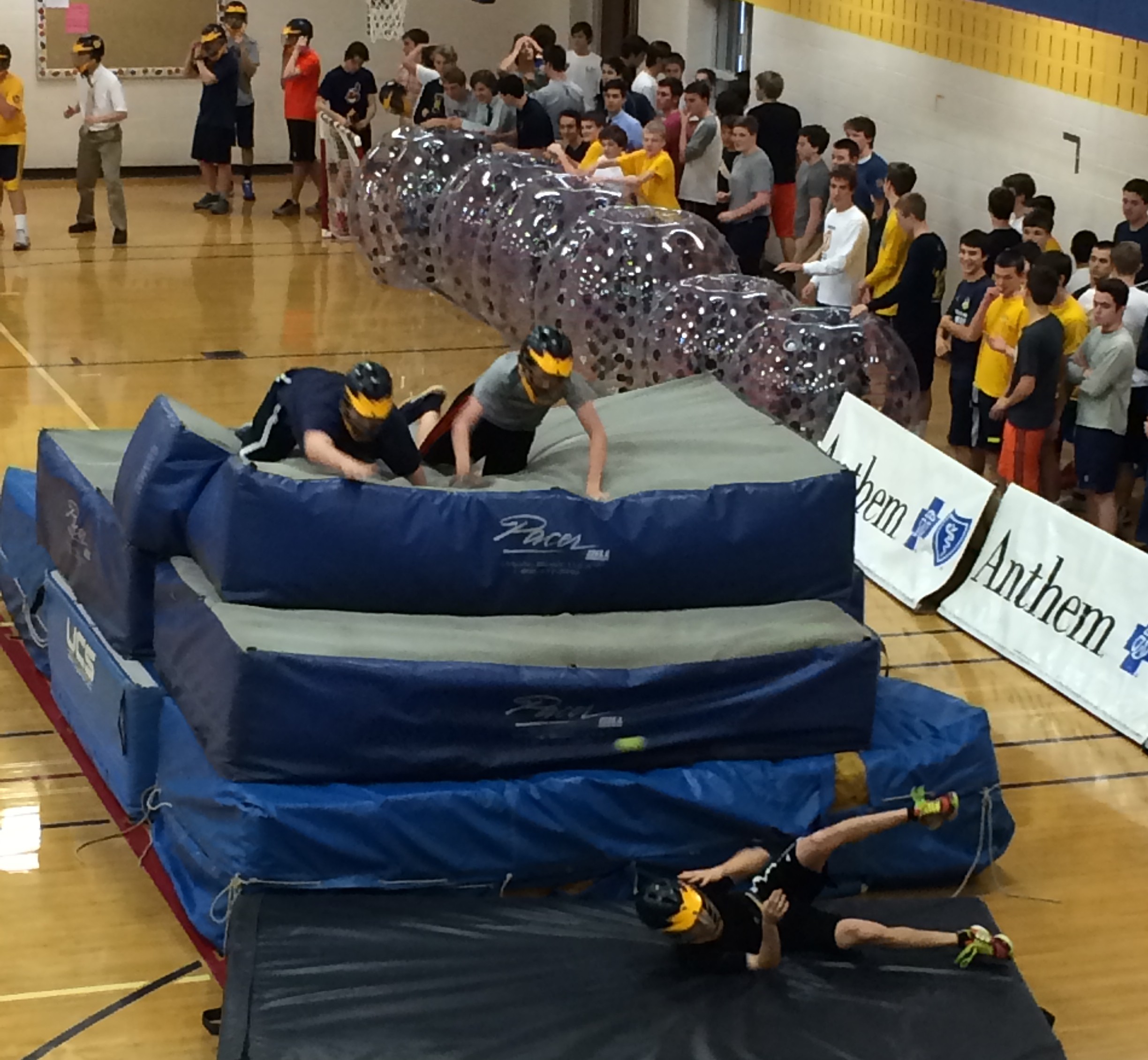
Based on events in the television show American Gladiator, the Gladiator Games are an annual event held by the Latin Club. The Games consist of three events: the obstacle course, where students run through a few different obstacles while being pelted with tennis balls and giant exercise balls; the joust, where students try to knock teachers off the platform and vice-versa; and powerball, in which students try to get rugby balls into a garbage can while teachers try to knock them down with a blocking pad.

The routine was amended this year in order to increase student participation and enjoyment. the bumper balls section saw the addition of bumper balls, which had been bought by the Latin department earlier in the year. The obstacles in the obstacle course, however, remained the same and included scaling stacked mats, running through hurdles, running up and down a ramp, and being hit with a steady barrage of tennis and exercise balls.

The joust, too, escaped major alterations, except that this year it was student-versusstudent rather than student-versus-teacher.

However, powerball was replaced with bumperball, an event in which students, in bumper-balls, try to to knock over bowling pins which are defended by teachers in bumperballs of their own. The event seemed to be a big step up from powerball with both the students and teachers enjoying it much more because it enabled the teachers and students to slam into one another with a strength they ordinarily couldn’t.

While most participants agreed that the event was a worthy addition to the usual itinerary, strategies for bumper ball differed. Some groups tried immediately to knock the bowling pins over, while others immediately tried to the knock the Latin teachers over, a pointless effort because both Mr. Arbeznik and Mr. Masterson levelled anyone in their way. No matter what strategy a team pursued, everyone had a great time, and the Gladiator Games achieved another year of success.

Student Senate gearing up for another busy semester

by Daniel Klein ‘15

With so many different events going on this year, the Student Senate has been very busy.

According to Student Body Vice President Danny Ertle, they are currently in the process of collecting 1500 toys for the neighborhood kids, developing the new wildcat card, and planning prom. The lives of Student Senate members are often consumed by the workload. Danny stated, “95% of our days include something we must do for Senate, but with that being said, we’re more than happy to do anything that will benefit our classmates and the school.”

One of the goals of President Pat Mulach and Vice President Danny Ertle is to get students more involved in school decisions. To that end, they have already given students the option to pick both the homecoming and prom themes. Danny stated, “since much of what we do directly impacts the students, we want them to have as much say as possible.”

The Student Senate has also been working on a few new exciting initiatives, the biggest of which has been the Wild Cat Card. The Wildcat Card will now give students the opportunity to go off campus and eat at various restaurants in the area. Students will also receive discounts at certain restaurants as a way of further incentivizing use of the card.

Next semester, one of Student Senate’s largest projects will be planning prom; it is always a long and arduous project that consumes a lot of time.

Another of their big projects will be finding fun ways of bringing the student body together, including the return of last year’s Casino Night. But students should expect new events as well.

“Our goals in the beginning were to get the student body involved, carry on some of the traditional projects that we do, but also attempt to bring some new ideas to the table,” says Ertle.

Moving hearts and furniture: The Saint Bernard Movers

by Colin Kelley ‘17

For over a decade, St. Ignatius students have traveled all over Northeast Ohio moving furniture and other items for people in our community as members of the CAT program, the St. Bernard Movers.

The Movers depart from the Arrupe House at 3:20 each Monday and pick up the items from a donation center or directly from a house. The Movers then bring these items either to a home or back to St. Ignatius. “We usually are helping people in transition homes move their furniture,” explained Movers leader Mr. Kosko ‘10.

Generally, the Movers assist friends of Ignatius in the Ohio City neighborhood, Labre friends transitioning into a home, or anyone else who has contacted them or a partnered service organization. They also help move boxes for the Christmas Food Drive and move the supplies for the Arrupe Christmas Party. Anyone interested in donating furniture or any other items can contact Mr. Kosko by email or one of the organizations that partner with the Movers, such as the May Dugan Center or CARE Alliance.

Led by alumni volunteers, Mr. Kosko ‘10 and Mr. Nguyen ‘08, the Movers have completed 13 moves this school year. The Movers have averaged 25-30 moves a year totaling between 250 and 300 moves over the past ten years. Students from all grade levels are invited to participate in the Movers. “We have had a lot of freshmen this year,” Mr. Kosco ‘10 said concerning student involvement this year.

The St. Bernard Movers provides a great opportunity to get involved at Ignatius, whether you are a freshman trying to get involved in service for the first time or even a senior CAT leader looking for one more rewarding service experience. With the weight room closed, there is no better time to join the Movers and keep the muscles huge with the couch-press and single chair-leg deadlift.

We’re cramming…we hope you like cramming too

by Owen Miklos ‘16

The week before finals is a stressful time for both teachers and students alike. Whichever category you fall under, there is going to be a fair amount of cramming that takes place.

Teachers, more often than not, find themselves behind on their lesson plans and calculate that they could probably fit a month’s worth of coursework in four days should everything pan out, all the while cursing the off-days they took in the waning moments of September.

On the other hand, students, when asked about their studying techniques, will often outline their strict regimens involving ingenious timing blocks and dietary supplements, only to end up pulling out their books the day of the final.

It’s curious how varied the student body’s response to the question of cramming was. Those simply hoping for a passing grade were very forthright about their studying tactics, saying, simply, that no such tactics existed. They were better off, they said, doing things “their way” than opening up the book that’s been gathering dust in their locker since August.

On the opposite end of the spectrum, those fighting it out for class valedictorian were also very upfront—they admitted that the chances of them studying several days in advance were slim. They instead opted to rely on what they had learned from the past few months. At most, they would look over their notes a couple days before the final. “My grades have typically gone up after finals so the material must stay in my head until then,” notes Andrew Zawie ’16.

Then there are the rest of us: With our lofty and proudly proclaimed intentions of multiday course review, online Quizlet sessions, and group collaboration, the true American legacy of last-minute cramming is nowhere more prevalent than in the storied halls of Saint Ignatius—salvaging passing grades without study aids since 1886. And the flagbearer? Our own Nick Serio ’16.

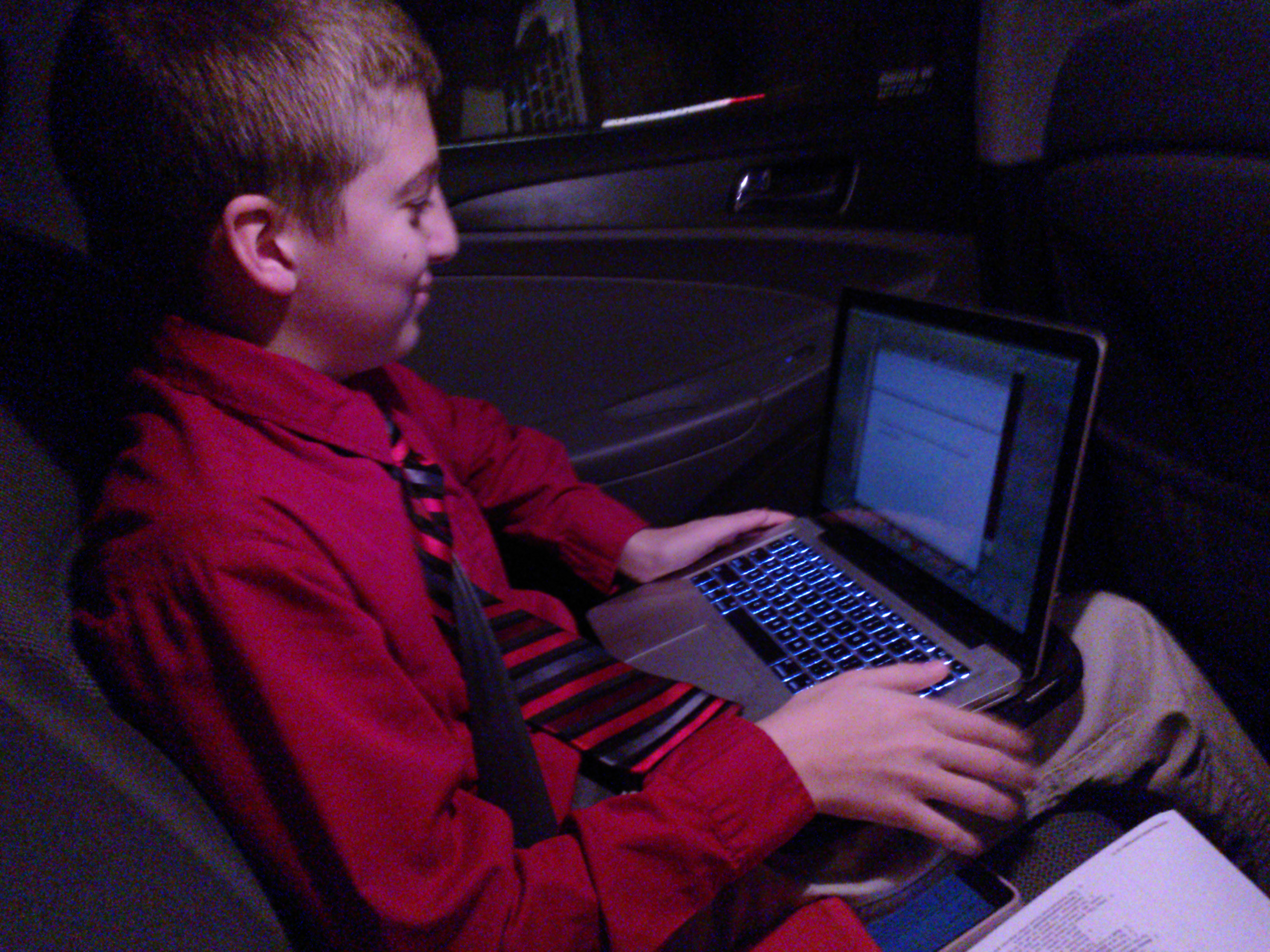
While the rest of his sophomore APUSH brethren paced out their identifications—short essays for vocabulary terms—for Mr. Pecot ’91 over week-long spans, Serio, after a week’s worth of procrastinating and selfreassuring pep talks, with mere hours left on the turnitin.com clock, opened up his laptop and his copy of The American Pageant over the backseat of his ride into school and started grinding out his essays. Somehow he managed, while his classmates looked on in disbelief. “That kid was operating on a different level,” his classmate, Geoff Allman ’16, stated. “I think he got a better grade than me, too.”

Fast-forward a year, and here we are again—big tests and college applications loom ahead, and Nick Serio’s not worried in the least. In between furiously filling out his MacNotes for his AP Language class the period before, Serio admitted, “I’m used to cramming because it seems like that’s what I’m always doing.”

No suprise: O’Rourke promises yet another title for the IceCats facing tough schedule

by Brendan DeVenney ‘17

The 2014-2015 Varsity Hockey team is entering a season with great expectations and great promise, but with chemistry-building to do. After coming off a season that saw them make history in a way they may not have wanted to, all eyes will be on them to see how they will respond.

There are a lot of returning seniors on this year’s team, many of whom made their name last year and contributed a lot, especially in the 2014 OHSAA Division 1 State Hockey Championship Game, where the Wildcats tied Sylvania Northview 1-1 after seven overtimes to be crowned co-State Champions. Wesley Deacon ‘16 and Dylan McKeon ‘16 will be the promising junior goalies this year, after having standout seasons last year. Cage Cramer looks for a standout season as a defender, and Kevin Yarcusko ‘15 will also be an important man on the ice in his final season with the team.

Head Coach Pat O’Rourke always looks for strong leadership with his teams, and that, he says, is definitely found in his captains, who are arguably some of the best in the state of Ohio; senior forward Jack Wiegandt, senior forward Ethan Whitney, junior forward Aidan Spellacy, senior forward Jack Mazanec, and senior forward Matty Geither. Leading by example, they are Coach O’Rourke’s go-to guys on the ice this year. Joe Mertens is central figure on and off the field for the Saint Ignatius Wildcats.

There are also promising younger players on this years team who had standout seasons on junior varsity last year.

The schedule is another tough one this year, as they have the usual Great Lakes Hockey League matchups to take care of, which are always competitive, especially the two Saint Edward games. The Wildcats head to Culver Military Academy in Culver, Indiana this year to compete in the Culver Tournament versus some of the best teams in the region, such as Glenbrook North from Northbrook, Illinois and Shattuck Saint Mary’s out of Fairbault, Minnesota. On January 1, 2015, the Varsity Wildcats face Saint John’s Jesuit in an outdoor game at Fifth-Third Field, home of the Detroit Tigers’ AAA-affiliate Toledo Mud Hens, which is part of the Toledo Walleye Winterfest. And they also host a Martin Luther King, Jr. Weekend tournament at Brooklyn Ice Arena versus some of the top teams in the region as well, such as Saint Rita’s out of Chicago, Illinois, Findlay, and Culver Military Academy. Bottom line: a very tough schedule awaits the Ice Cats.

Even after coming off a season like last year, it doesn’t mess with the returning players, according to Coach O’Rourke.

They’ve stayed focus all throughout their preseason practices and games that they have already played. This is a team that is expected to compete hard in every game. The returning players are well aware that everyone is expecting a lot out of this team that made national headlines last year, and are focused and ready for the challenges ahead. As far as their tough schedule goes, they want to play a demanding and challenging schedule. They wouldn’t have it any other way.

It’s going to be an exciting season for the 2014-2015 Varsity Ice ‘Cats, and their goal once again is a state championship.

AlleyCats rolling to states

by Parvis Kanga ‘15

The St. Ignatius bowling team has started strong this year, winning its first two matches against Central Catholic and Brecksville. With confidence at an all-time high, the team is eager to make states this year and improve on last year’s eight and two record. Senior bowler Garret Forst is especially optimistic about the team’s chances. “We have a very good chance of going to states this year,” he stated.

Garret Forst, one of the five varsity bowlers lead by Captain Gianni Schaeffer, is an accurate representation of the bowling team’s general attitude. Drinking blueberry coffee while he bowls, Garrett is always very calm and relaxed, as are his other team mates. This is partly due to the strong sense of solidarity that has developed amongst the bowlers over the years.

Unfortunately, the bowling team is not very well known, and few people actually come to watch the matches. They compete nearly every week on saturdays at either Buckeye Lanes or Cloverleaf Lanes. Competitions are often very exciting and competitive, and the casual spectator will find accommodations at both bowling locations to be quite sufficient.

In light of this, Garret remains optimistic and encourages others to come and watch the games. “Its a very exciting environment,” he stated, “and we really would appreciate it if people came and supported us.”

Ignatius Family Teach-In promotes social justice in Washington, D.C.

by Nick Craicun ‘16

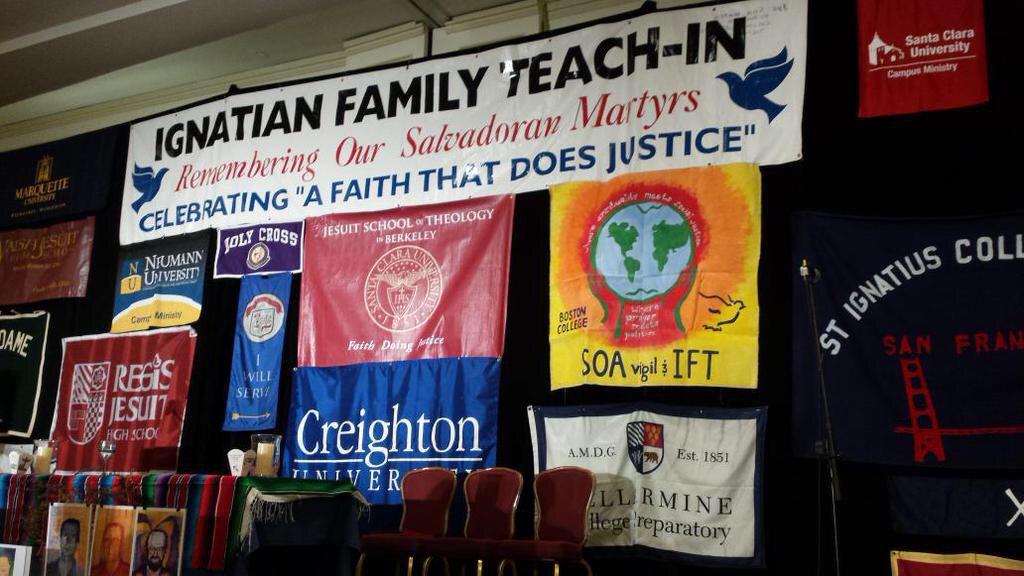
On November 15, 2014, a group of 33 Ignatius students went on the Ignatian Family Teach-In in Washington, D.C. The students were led by Mr. Tim Evans, Mrs. Mary Catherine Koehler, Mrs. Emery, Mr. Savastano, and Ms. Malone. This year’s Teach-In was composed of over a thousand students, teachers, and a bunch of campus ministers. The majority of the students are from Jesuit high schools, universities, and institutions
just like Saint Ignatius High School from around the United States.

So what is the Ignatian family Teach-In? Well, for starters, the Teach-In is an opportunity to work for peace and justice. This Teach-In focused on social justice, the promotion of a just society by challenging injustices, and valuing diversity. The Teach-In provides the chance to learn about many interesting topics, such as immigration, taxation, and environmental protection, among others. The Teach-In helps students realize what they can do to start making changes.

Students began to take action on the most important day of the trip, the final day. On Monday, November 17, students were able to take their ideas to federal senators and representatives in the Capitol Building. The students brought up important topics such as immigration and gave ways that the nation as a whole can make the process easier and more just. Students supplied their own ideas and were given immediate feedback on what the government is already doing. Furthermore, many of the councilmen and senators took the advice into deep consideration, which benefits the students by demonstrating that they themselves can make changes happen.

Aside from learning about social justice, the Teach-In was also very focused on prayer. Students were given the chance to learn about the Jesuits and how they fight with the help of Christ. Many of the speeches given at the Teach-In showed how a strong faith can basically make anything happen.

This is the nineteenth year of the Teach-In, and if you are interested in attending next year, flyers will be sent out around our high school next year for students who want to participate. Don’t miss your chance to take action!

Menace on West 41st Street

by Brad Horton ‘15

When I first saw the bike lane, getting off I-90 for Senior Orientation, I was irritated. The bike lane had taken up the entire right, reducing West 41st street to a one lane road. This was more annoying to me than the horrendous potholes that formerly plagued the road, but I figured that at least this lane would open up an opportunity for the bikers in Ohio City.

bikeLanes1
Since that ill-fated thought, I have not seen one biker use the bike lane when I take West 41st in the morning. Because this lane is a bike only lane, there is no opportunity to alleviate traffic in the mornings when no one is using this lane. The lane should have been constructed so that it can be used by both cars and bikes. It is obvious that the proper research was not done when planning the new headache to West 41st Street.

A bike lane makes sense in place where you can bike year-round, but Cleveland is certainly not a place where you can bike for the entire year. The snow and the freezing temperatures are major impediments to bikes and their owners.

West 41st was already crowded to begin with. With the proximity to the highway, parking on both sides of the street, and the occasional road hazard like potholes or signs; this bike lane made an already congested and dangerous road even more congested and dangerous.

I understand the need for an up-and-coming neighborhood like Ohio City to keep up with the latest fads like biking, but there is better way to make the roads more bike friendly. Why not expand the road or start the bike at a larger and more frequented road like Loraine Avenue? It is great that Ohio City is becoming more biker friendly, but that change should not drastically affect the commutes of car drivers.

Recycling on campus: same old, same old

by Christopher Rini ‘15

Recycling at Saint Ignatius is still in its infancy and has much room for improvement, but already it is an effective program that with plans to expand. Although the bins serve only as receptacles for paper, plastic, and cardboard, they don’t serve that purpose all that often, it
turns out.

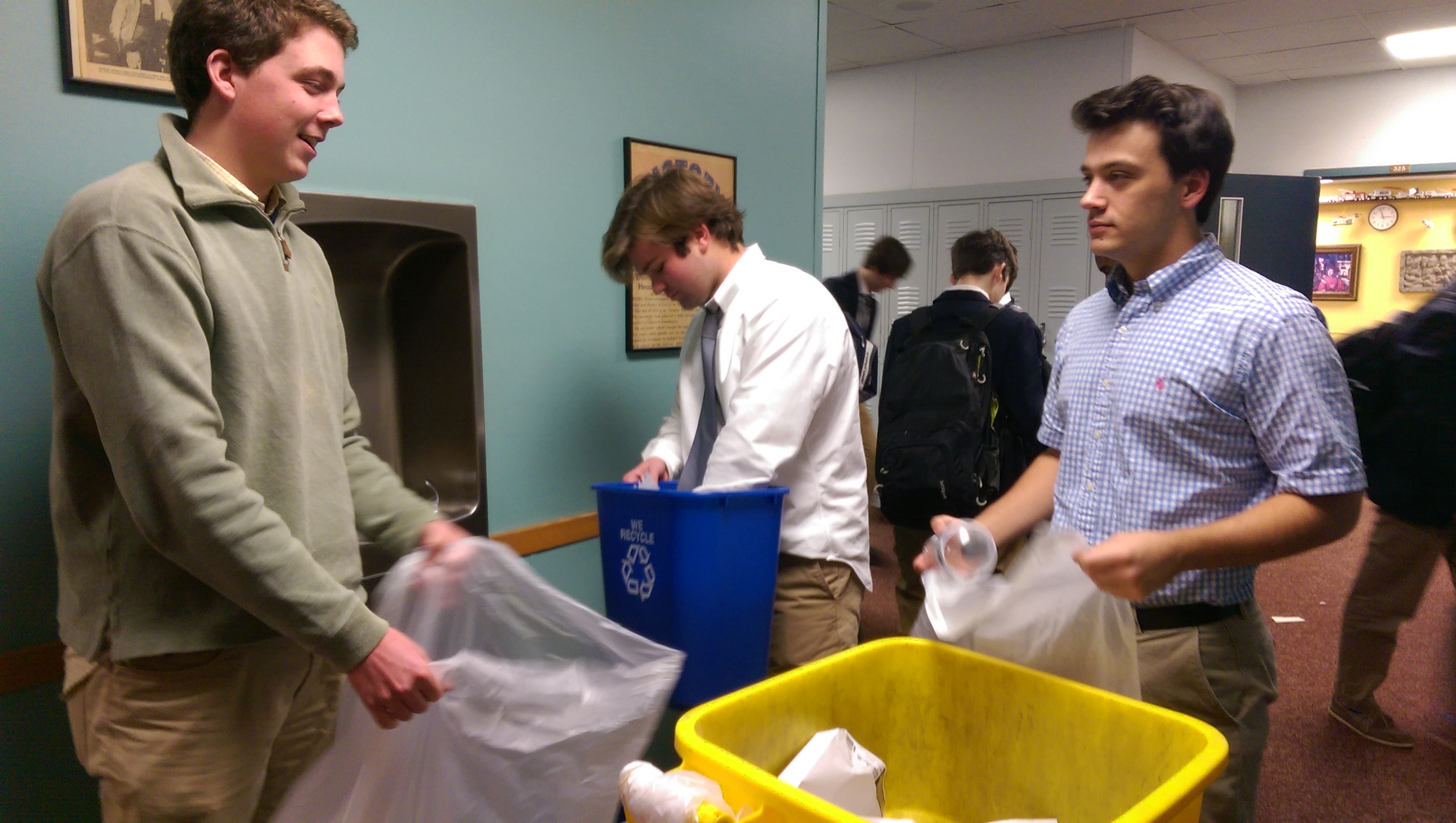
Mr. Nolan, moderator of the student Green Team and the head faculty member responsible for the recycling program, says that as a young program, we aren’t yet recycling enough both in terms of participation and what we recycle. In the works are plans to begin composting (a type of a recycling of organic materials) as much of the food as we can at school, and to make forays into the recycling of small electronics. Also, more emphasis will be put on all three R’s of recycling: reduce, reuse, and recycle. Considering these three, Mr. Nolan advises everyone to, “reduce how much they use, use reusable containers, and recycle everything you can.”

Most importantly for improving recycling at Saint Ignatius is ameliorating the problem of the simple fact that students choose not to recycle even when it is available right in front of them. For a lot of kids, just walking an extra five feet to throw that can in the recycling is a burden that they see no worth in doing. So while improvements on the technical parts of recycling are going to be made, the charge of recycling lies in the students’ willingness to recycle and the understanding of its importance.

Right now, that willingness and understanding is neglected by the student body. Mr. Nolan tells The Eye that, “We’re going to work on education, so that kids are more in tune with the spiritual side of recycling. Part of the Jesuit philosophy and teaching curriculum is care for the environment and the gifts God has given us.” Despite this unfortunate setback, the recycling program saves energy, saves money, and cuts down on waste for the school. With just more willingness and compliance to recycle, all of these positive outcomes will grow.

So in conclusion, Mr Nolan’s message of advice about recycling to the student body is simply “Walk the extra five feet.”

Selby wins ‘Best Delegate,’ but Diplocats fall short at UVA

by Kevin Deegan ‘16

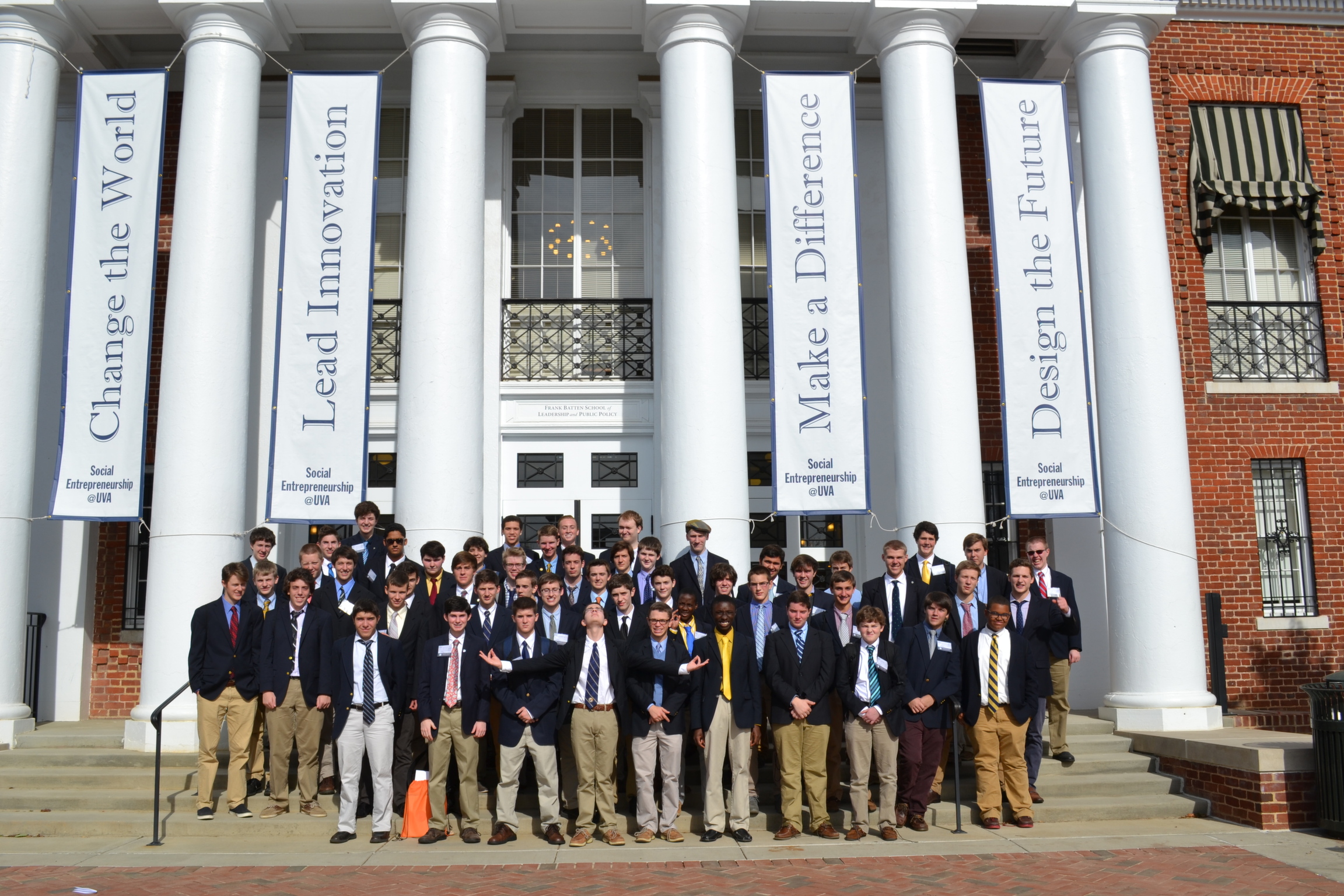
Fifty-three Saint Ignatius student-delegates from the Junior Council on World Affairs club departed for the University of Virginia on November 6 for the thirty-fourth annual Virginia Model United Nations conference.

The second year participating in the esteemed conference, the “Diplocats” engaged in debate with fellow delegates while solving past, present, and future issues from all corners of the world. The conference, held November 7 to 9, entertained schools from all over the United States.

But this isn’t just a show-up-and-debate kind of club. JCWA requires months of research culminating in the (hopefully) perfect position paper. Delegates know their topics inside and out before stepping on the bus to head to the conference. Research is done, papers are written and graded, some tears are shed, and the final products are at last sent off to the whatever university is holding the conference. Furthermore, the students practice parliamentary procedure and speaking techniques and review proper format for resolution papers, also known as working papers, and other rules of the conference.

At UVA conference, once Mr. Arko and Mr. Peter Corrigan ‘69 had finished registering the group, the students were given the chance to tour the campus or participate in either delegate workshops run by the university’s professors and students. Talks’ topics varied from the importance of civic engagement to about the Russian-Ukrainian crisis. Other workshops trained inexperienced delegates by introducing them to parliamentary procedure, which is the rules by which a conference is run.

“The workshops were interesting and helpful. The talks by the professors were somewhat like college lectures.” said Bryan Fuerst ‘15.

After the opening ceremonies and a dinner break, delegates entered the first committee session. This is where Model United Nations actually occurs. Twenty-four different committees were available, all of which had at least one Ignatius student in them. Committees ranged in chronological and geographic focus from a simulation of the Roman Senate in 63 BC to the Russian Security Council in 2015.

“I personally enjoyed my committee. It was interesting to hear the ideas of the other delegates and to see which resolutions would be passed.” commented Ryan Spolar ‘15 on his experience in the African Union committee. Delegates worked together for a total of eleven hours over three days.

Finally on Sunday, the closing ceremonies occurred. The Saint Ignatius team came in with an energetic atmosphere around them.

However, the competition was challenging, with only two students, Kellen Dugan ‘15 and John Selby ‘15, winning recognition for their superior work in committee.

Selby reflected: “JCWA is a very important club to me. It has helped me to develop valuable skills such as communicating better with others. But the club is more than diplomacy. I love all the guys in it, and because of this I have made some great friends.

VAMUN was an amazing conference. The competition was strong, and my Press Corps committee was by far the most intense committee I have ever been in. Winning Best Delegate was an incredible feeling. All the hard work paid off, and hearing the Ignatius guys explode when they called my name was a very special moment to me.”

The loss was a blow to the Saint Ignatius team; however, the Diplocats walked out with their heads held high at this challenging conference. “Even though the result wasn’t what we expected, it was nice spend-
ing time with my fellow sweet boys.” commented Gennaro Olivo ‘15.

JCWA is the favorite extracurricular of its members and for good reasons. Although it may seem boring, to the Diplocats it is far from that. Students enjoy everything about Model United Nations. One of the best parts is that students get to experience a college campus for three days.

“The university was beautiful and the architecture was amazing. The history around the university with its being founded by Thomas Jefferson was great to experience,” stated Gabe Mielke ‘16.

Students also enjoy the freedom and fun that are had at these conferences. Students eat at many different local restaurants, spend time hanging out or playing frisbee on college green spaces, and even attend the exceptional and prestigious Delegate Dance on Saturday night. “The conference was well-run and I really enjoyed participating in it.” said Jack Seeley ‘16.

But the club is even more than just fun. “In all, JCWA is one of the most well-liked clubs at Ignatius. I encourage all students from all years to give JCWA a try.” said Brian Messina ‘16, one of the leaders of the club. The Diplocats meet every Tuesday after school at 3:00 in room 419, for those interested.

The club has already begun preparing for the next conference at Michigan State University from January 30 until February 1.

Each student is ready to make even more of an impact at this conference. The team should do much better since they are dedicated to putting in more preparation time.

“I personally believe that we will win at MSU because of our strong veteran delegates and our promising underclassman.” stated David Rossman ‘16. The Diplocats are prepared to win and get back the national ranking they had held over the summer.