Home Blog Page 85

“Miracle on Ice” olympian emails O’Rourke for Co-State Championship

by Brandon Borges ‘15

Following the seven-overtime finish to the hockey state championship game, a shared 1-1 title with Sylvania Northview, head hockey Coach Patrick O’Rourke was the focus of an onslaught of attention from national news media and social networking chatter. But head coach Pat O’Rourke was nonetheless stunned to receive an email from one of the most legendary US hockey players ever, Michael Eruzione─ the captain of the illustrious 1980 USA Olympic Hockey team.

Mr. Eruzione and his hockey team are best remembered for their unbelievable upset against the Soviet Union team, named the “Miracle on Ice,”  in which Eruzione scored the goal that put the USA team ahead 4-3. The team then went on to win the gold medal.

In the brief email, he lauded the team for its performance. “I hope you are not disappointed that there was no winner,” Mr. Eruzione wrote. “It was an incredible moment of survival and you never wavered and never quite─ a true testament to a great team with great character and determination.”

Some, including Coach O’Rourke, thought that the message was a joke at first. However, they were astonished to verify Eruzione’s authorship of the email.

“I couldn’t believe he took the time to reach out like that,” said Coach O’Rourke. “It’s not every day you get an email from him.”

The email was sent to congratulate Coach O’Rourke for what may go down as the most controversial hockey game in recent memory, the 2014 OSHAA Hockey State Championship Game. The 7OT thriller that resulted in two state champions gained national notoriety, prompting Eruzione to to reach out and congratulate the team.

“I felt very proud of our team for everything that we accomplished and getting that recognition from a legend who played the game and knew how much it meant to us.” Senior defender Riley Ellis said.

From the SportsCenter highlight reel to the New York Times front page, the bizarre, once-in-a-generation ending of the Ignatius-Northview championship game has made quite a nationwide impact.  Mr. Eruzione’s email is the a cherry on top of the many surreal experiences the team has had after the game, and one of the strongest indicators of the lasting impression that the game will have.

Senior forward Brian Fitzgerald agrees with the Miracle on Ice captain about the importance of the victory.

“I think the game will set a precedent for rulings on future games and go down as a best display of the love hockey players have for their team and teammates,” he said.

“A tie?!” say state champions

by Patrick Millican ‘15

The OHSAA’s decision to call the Ignatius-Sylvania Northview state hockey championship game a tie, after seven sudden-death overtimes without a game-winning goal, has sparked debate nationwide and brought Ignatius into the spotlight of national media outlets including the New York Times, USA Today and FOXSports.

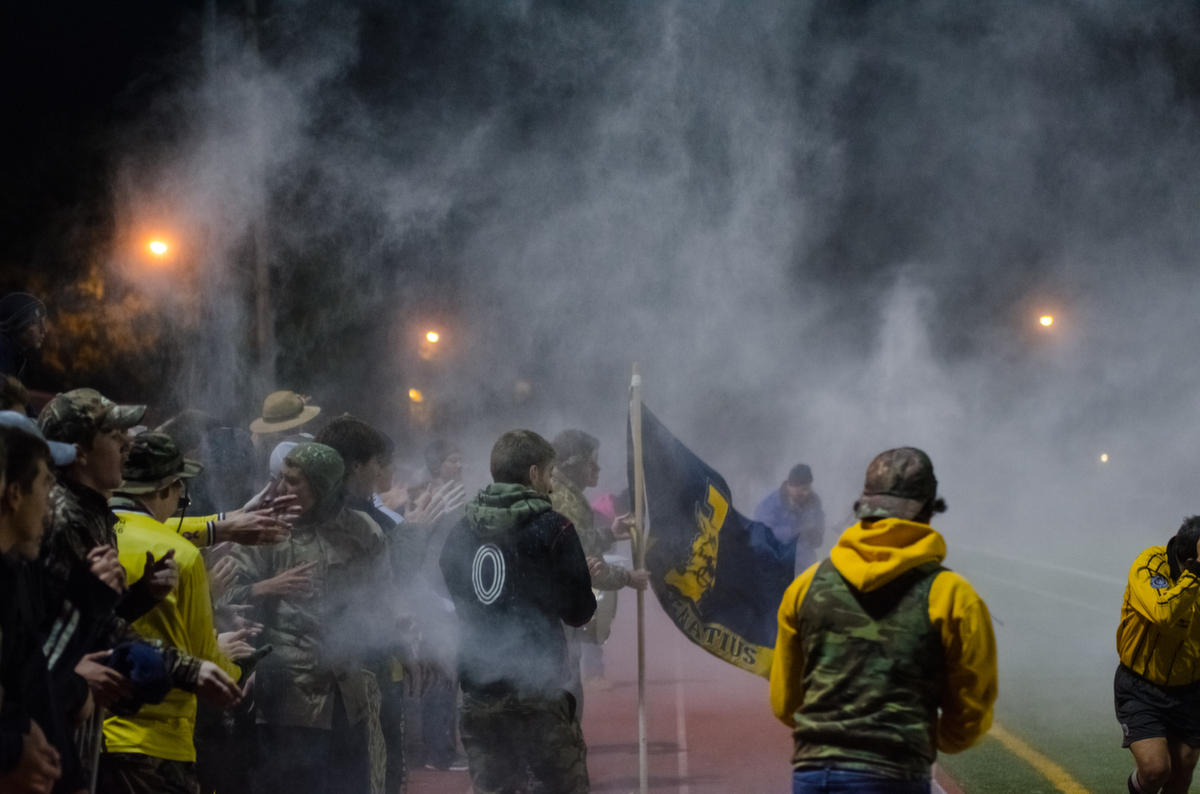
The discussion has revolved around the ramifications of ending a championship game without a winner, and whether the exhausted players deserved to have a clear outcome after over four hours of play. Student reaction on campus varies, but students surveyed directly were preponderantly negative despite overwhelming support for the team at Monday’s all-school rally.

Some students, including junior Matt Rath ‘15, characterized the result as abjectly unfair.

“It’s not a victory if it’s a tie,” Rath said, echoing the views of students who held out in the stands for the entire game. After the OHSAA announced the game had concluded, Ignatius students booed, and the Sylvania Northview student fan base chanted “Let them play” to no avail. The state body had decided to call the game early in order to protect player safety.

Ignatius students like Victor Lutz ‘15 expressed skepticism over whether the co-champion declaration was valid.

“The result is shocking,” Lutz said. “Tradition holds that there’s one state champion. I think it’s stupid.”

Peter DeGaetano ‘17 felt that Saint Ignatius had been deprived of an outright and inevitable win over the fatigued Sylvania varsity.

“It was unfair that Ignatius got ripped off, since they were eventually going to score and the other team was too tired,” he said. “They weren’t conditioned enough, so we had the advantage.”

Members of the hockey team seemed to be more supportive of the result, although the consensus was not unanimous.

Seth Whitney ‘17, a junior varsity and sometimes varsity player who travelled with the hockey team to Columbus, said that with hindsight the regulatory body made the right choice.

“Ultimately, it was the right decision. We outplayed them, but in the end we’re both state champions,” Whitney said. “It was the right decision.”

Senior Beck Schultz ‘14, on the other hand, was critical of the OHSAA call. He expressed his disappointment at ending his final season as a Wildcat hockey player without a clear-cut championship.

“It was kind of blindsiding. We were ready to play an eighth overtime and then we realized [Northview] weren’t coming out, and coach called us over and told us it would be a co-title,” Schultz said. “It was shocking. No one wants to end their senior year with a tie.”

Matt Moore ‘14, team manager, simply described the decision as “shady.”

Negative feelings about the result may change once the state championship trophy reaches the school’s trophy case. But at Monday’s raucous, celebratory rally, the varsity head coach Patrick O’Rourke was crystal-clear about how proud he he felt about his team after their performance Saturday.

“If we can walk around these halls and feel like state champions, that’s all that matters. So here’s my question: in your opinion, does this team, the team that went wire to wire in the polls, won the inaugural Cleveland Cup, won its district, won its state semifinal seven to zero, and played superbly for four and a half hours in the state final, does this team deserve to walk together forever as the 2014 state hockey champions of Ohio?” O’Rourke asked the student body to a standing ovation and thunderous applause. He He affirmed the deep bond between himself and his players, and expressed heartfelt awe at their efforts on the ice. “You guys kept at it and never gave up. I’m so proud of you.”

Saint Ignatius hockey named Co-State Champs after 7OT marathon

By ALASTAIR PEARSON ’14  and PATRICK MILLICAN ’15 with BILL HUESKEN ’15

After seven overtime periods, the Ohio State High School Athletic Association ordered an end to overtime play and declared the Saint Ignatius Wildcats and the Sylvania Northview Wildcats co-state champions.

The controversial decision averted an octuple overtime and brought an unusual end to the Wildcats dominant season.   It also made good on Coach Patrick O’Rourke’s promise to bring another state championship trophy home to 1911 West 30th Street.

The final score of 1-1 was the result of a ferocious offensive performance by Saint Ignatius, who kept the pressure up on the Northview goalie throughout both overtimes.   Ignatius dominated shots on goal 79 to 27, with several potential gamewinners deflecting off the posts in overtime.

The tie, despite the dominant Ignatius performance on offense, was largely the result of Sylvania goalkeeper David Marsh’s superhuman effort between the pipes.  Marsh withstood 79 shots on goal by the Ignatius offense.    The Sylvania Northview Wildcats scored early in the first period to go up 1-0, and maintained their advantage for the first two periods before Danny Brogan netted the game-typing goal with 7:45 remaining in the third period

The win was the result of a collective will to win that fueled three periods of trademark Ignatius hockey – a relentless, hard-skating attack that wore down, but ultimately couldn’t crack the Sylvania defense.

The victory marks the third state championship in hockey for the Saint Ignatius Wildcats, and the second for Coach Patrick O’Rourke including his 2010 team’s triumph over Sylvania.

The first-place finish in the state tournament was Ignatius’s first hockey state championship since 2010, when the Ice Cats triumphed over Northview 4-1 to give Coach O’Rourke his first state title as the varsity head coach.

The seven overtimes set a state record for the longest championship game, and almost matched the 2007 record for longest game overall before the game was cut short to protect the health and safety of the players. More than 23,000 listeners tuned in to the Saint Ignatius Broadcasting Network’s live broadcast of the game from the press box, setting an SIBN record.

The victory, shared with Sylvania, marks the third state championship in hockey for the Saint Ignatius Wildcats, and the second for Coach Patrick O’Rourke including his 2010 team’s triumph over Sylvania.

The season’s goals accomplished, the team look to celebrate their fiercely contested championship.   But first, they’ll get some well-earned rest. And for all the controversy over the OHSAA’s call to cut the game short, Coach O’Rourke didn’t mince words about what he thought of the victory.

“We’re state champs,” he said.


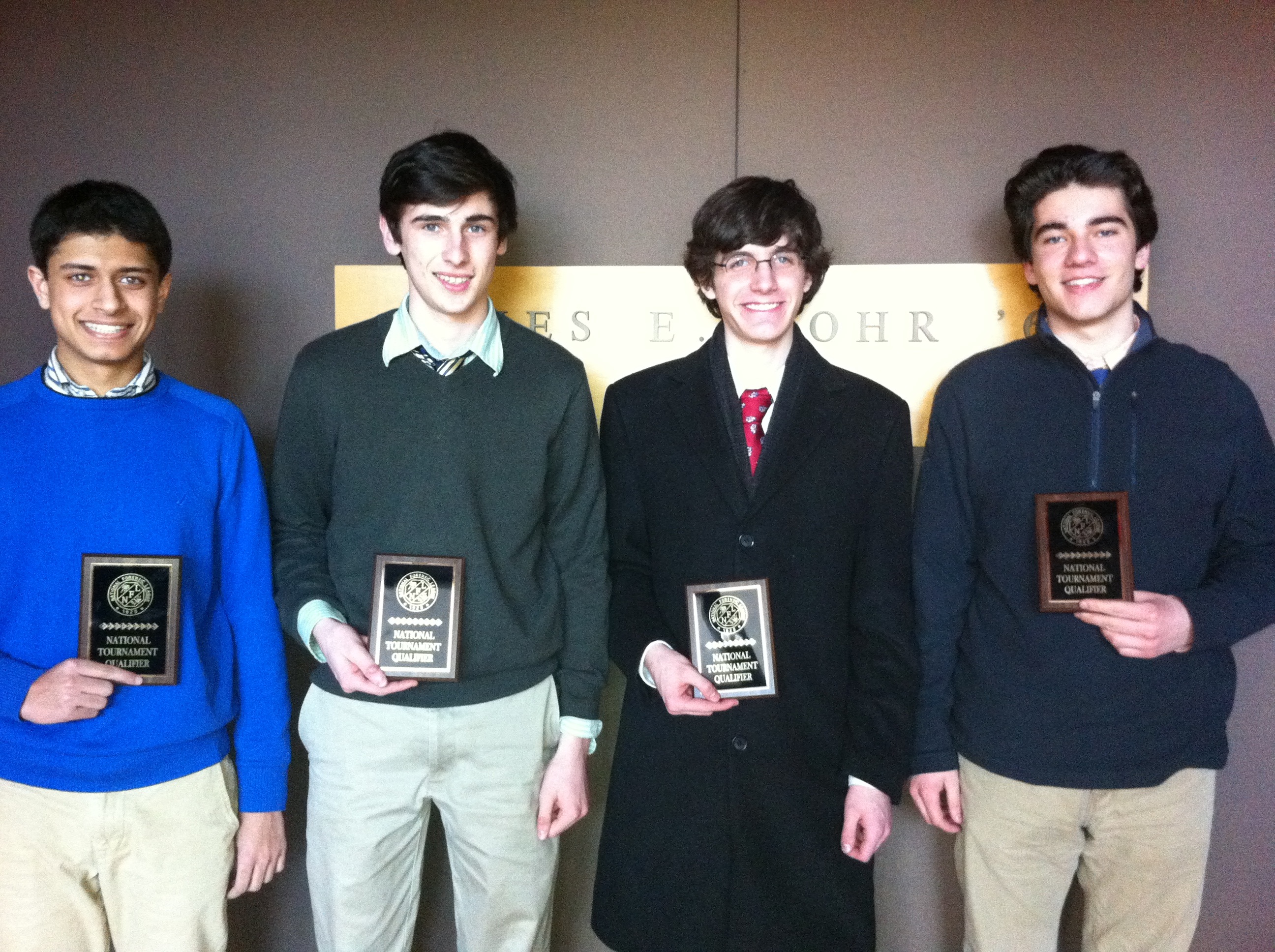
Ignatius debaters ready to hand reins to next generation

by John Dorow ‘15

Some of Saint Ignatius’s most talented athletes practice far from the football field, rarely if ever set foot in the weight room, and dominate their opponents so thoroughly that they are considered a near-lock for a repeat state championship this spring. Their names and victories populate the morning announcements, and debaters such as Andrew Beddow ’14, Kevin Pucci ’14, and Sean Lavelle ’14 spend their weekends flying across the country to face and defeat the best opponents in the nation.

Many of the debaters realized their passion for argumentation in Mr. Buzzelli’s freshman year Oral Interpretation class, and, armed with an interest in policy, economics, and other academic topics, they decided to make the trip up to Room 512 to join the squad. Team captain Kevin Pucci said his love for debating grew out of a general love for knowledge.

“[I debate] because of the depth and diversity of knowledge it requires. Not least, it makes me an informed citizen of the world,” Pucci said.

The team travels to many tournaments per year at top national universities ranging from Georgetown to Michigan, and across the board Pucci, Beddow, and Lavelle rank among the top debaters in the competitions. In the 2013 state championship, the team won overall with Beddow finishing in the semifinals and Pucci and Lavelle placing first.

The 2013 championships was Pucci’s second consecutive win, as he also won the 2012 state tournament. The team is also currently competing to gain entrance into the Tournament of Champions, the national championship tournament, which would be Ignatius’s first berth since the early 2000s.

With Beddow, Pucci, and Lavelle graduating this June, leadership of the team is being handed over to Prithvi Pendekanti ’15, and the veterans are excited for the future of Ignatius debate.

“I’m confident the program will be in good hands,” Beddow said. “We have many dedicated, intelligent novices who show promise, too.”

Pucci, Beddow, and Lavelle are all considering continuing their talents in debating throughout college after sharpening their skills at Saint Ignatius. Beddow said he credits debate with making the person he is today.

“I have learned more in four years of policy debate than I believe I could have anywhere else,” he said.

As snow days pile up, school eyes changes for 2015

by Connor Schumacher ‘15

The Ohio Legislature has acted to significantly modify the system for determining how often schools call snow days, otherwise known as calamity days. Starting in the 2014-15 school year, the state will begin to evaluate time in school – and thus requirements for total amount of time students spend in class – not by days, but by hours. The revised state mandate will require that schools be in session for a minimum of 1,001 hours a year, instead of the current minimum of 178 days.

Dean of Teachers Mr. Ptak said that the hours are calculated on a basic formula by multiplying all the hours of the day, excepting homeroom and lunch periods, by the amount of days in the school year. Generally, Saint Ignatius High school totals around 180 days. That basic calculation would estimate that school is in session for about 1,095 hours a school year- well above the state mandate of 1,001 hours.

However, the administration still needs to subtract all the hours lost during days when the schedule is irregular, including delayed starts, early dismissals, and rally schedules. Even after compensating for those lost hours, the administration expects the school to remain in session with a solid safety cushion above the mandate, creating flexibility in case there is a need for snow days. Snow days, then, would be subtracted from the hours in which school is in session.

Mr. Ptak is less concerned about fulfilling the state mandate than ensuring that Saint Ignatius students are able to get sufficient time with their teachers.

“What is more important is how much time students need to be in class to really learn and excel in their classes. That is of far greater concern to us than fulfilling a state mandate,” Ptak said.

Although state regulations have changed, Saint Ignatius policy for calling snowdays has not.

“We [the administration] will close school if it is unsafe for the students, not to satisfy minimum hours or days,” said Principal Bradesca.

Does Ignatius pass the test of a more diverse student body?

by Kellen Dugan ‘15

The atmosphere at Saint Ignatius High School can accurately be described as one of great diversity. Diversity of race, culture, socio-economic status, religion, sexual orientation, and geographic location can all be found within the heterogeneous Saint Ignatius student body. The number of students of all underrepresented walks of life enrolling at the school is greater than ever, and it is still increasing.

The increasing diversity on campus poses important questions about whether students are succeeding in accepting and respecting one another’s differences, as well as whether Saint Ignatius is accommodating the many cultural, ethnic, religious, and sexual differences on campus.

Vince Hwang ‘14, President of Multicultural Student Union and Chairman of the Student Climate Committee, and De’Shaun Adair ‘14, African Methodist Episcopal preacher and Christian Action Team activist, said that the school is imperfect but improving.

Vince, an Asian-American senior, believes that the transition for any student from grade school to Saint Ignatius is difficult enough already, but says the “biggest obstacle” for students of multicultural backgrounds is the more difficult task of “fitting in.”

“I had a very hard time fitting in and discovering my identity in such a relatively homogeneous environment,” he said. “It took a long time to understand where I belong in relation to not only this school but also this city and even this country.”

Vince also said that, despite the growing numbers of diverse students enrolling, the “peer encouragement and acceptance level” of aforementioned diversity has not grown proportionally with the number of students, which can cause problems.

“There haven’t been many race-related insults or comments that I’ve personally witnessed, but there have been a few,” he said, “and a few is too many.”

While emphasizing that there is room to improve, Vince also stressed the many positive pro-diversity initiatives at Saint Ignatius, including the Multicultural Student Union, the Student Climate Committee, and the Multicultural Affairs branch of the Administration, directed by Mr. Jason Reed ‘95.

Vince said that Saint Ignatius is doing the best that it can to accommodate its diverse student body, and he only offered one specific improvement: a more diverse faculty.

De’Shaun, an African American senior, rated Saint Ignatius a six out of ten in regards to effectively making the adjustment for multicultural students easier. De’Shaun specifically remembers struggling to find “friends to sit with during lunch and free periods” during his freshman year. He also believes that fitting in is a difficult thing to do at Saint Ignatius, especially for students of different walks of life.

“Believe it or not, my religion helped me get to know more about other people,” he said, “by giving me something to talk about. It also gave people an opportunity to come see me preach at my Church.” De’Shaun mentioned that the environment wasn’t always accepting and open-minded, recalling a few incidents of generalizations due to race, “but luckily there’s not a whole lot of that.”

De’Shaun also joined Vince in praising the appeals and comforts of Mr. Reed’s office, especially for students struggling to fit in or trying to find their identity. “Mr. Reed’s office is always open to everyone from all walks of life. It truly made everything easier for me,” he said, reflecting on his years at school.

One possible improvement De’Shaun offered was the implementation of “cultural courses to teach students the importance and significance of specific cultures, especially those that are passed over by regular history classes.” He believes that the courses could be very instrumental in educating the student body about the significance of diversity.

In addition to the student perspective, Mr. Jason Reed ‘95, Director of Multicultural Affairs, offered a balanced view of the school’s atmosphere for diversity. Mr. Reed admitted that numbers of students from diverse backgrounds attending the school when he was a student was far fewer than the number now, but he also stated that the community in which he went to school had more unity than the unity present today at school. “We didn’t see each other as colors, we looked at each other as human beings and respected one another equally,” he said. “Overall, I had a great experience,” adding afterward, “You have to learn from each other to become the total person, the cura personalis, and that’s what I tried hardest to do here.”

While admitting there were a few isolated incidents of racism, he believes that culture has changed since he went to school, and thus changed the circumstances in which students are placed now. “I’ve witnessed many more incidents of racism and hate-related insults as an administrator than I did as a student, by far,” he said.

“My goal in 2005 was to create a comfort zone for all students. I wanted to teach students how to look at their neighbors as equals, as humans. All humans deserve respect,” said Mr. Reed. According to Vince and De’Shaun, Mr. Reed has accomplished his goal for the most part.

Mr. Reed’s list of goals includes heightening awareness and respect for diversity, fostering a community that embraces every dimension of diversity, and creating a comfortable environment for all students. He is proud of what the school has accomplished, but said that the work is not over.

“We’ve come a long way, in making this school a better place for all, but we still have a long way to go,” Reed said.


Reducing cheating requires a change in culture, says Dean of Academics

by Kellen Dugan ‘15

An unwritten honor code dominates academic behavior at Saint Ignatius, and most teachers make a conscious effort to foster honesty and integrity in schoolwork. As the school handbook explicitly indicates, there are serious penalties for cheating. The consequences for academic dishonesty range from an automatic zero on the given assignment to JUGS, probation, suspension, sharing the incident report with colleges, and immediate expulsion.

But if outsiders think there is no cheating at Saint Ignatius, they are sorely wrong. In an anonymous, man-on-the-street poll of the student body, nine out of ten students admitted to cheating personally or witnessing cheating without reporting it to a teacher. While the sample is not representative, the implicit indication is that cheating is alive and real in Ignatius classrooms.

The Dean of Academics, Mr. Michael Gavin, has a few explanations for the phenomenon. First of all, Mr. Gavin claims that “cheating is a misnomer,” and that “lack of integrity is a better description.” Mr. Gavin articulated three major reasons for the results of the poll: student laziness, pressure to succeed on students, and ubiquitous cultural preferences.

The first explanation, laziness, speaks for itself: a good amount of students choose not to study and resort to using others’ work whether it be on tests, homework, or papers. Some students choose that route, and Gavin says that they’re only hurting themselves.

The second explanation, pressure, seems to be a very common reason for cheating and compromised integrity. Most people understand that students are under an extreme amount of pressure to do well from parents, college, and, most frequently, themselves. When students are trying their best, with the intention of earning straight A’s, and they earn B’s, many resort to cheating in order to achieve the A.

“The B is no longer good enough,” said Mr. Gavin, “ because students need the A to appease the expectations, and thus justify their means of getting that grade.”

The third explanation, cultural preferences or tolerances, is a less tangible reason for people to understand, but it may also be the root of the entire problem of lack of academic integrity. Mr. Gavin argued that student culture downplays the severity of cheating, and the unstated norm about cheating is that “it’s not that big of a deal.”

Mr. Gavin defended the current hard curriculum and regulations that are currently in place at Saint Ignatius, affirming that they are the most effective rules that have been enforced yet, given the slippery topic of cheating.

Cheating is hard to prove unless students are caught in the act, and the consequences put in place are very severe, but enforcement is difficult. Mr. Gavin says that the regulations can change as much as they please, but if campus culture doesn’t change, specifically the tolerance and downsizing of the severity of cheating, then cheating will always exist.

The only thing that he believes can be done is to alter the “soft curriculum,” the expectations and culture norms, at not only Saint Ignatius, but all schools by incorporating an honor code for all students to promise to follow.

The honor code would try to foster an atmosphere of new and more honorable expectations.

“If the right thing to do becomes the cool thing to do,” said Mr. Gavin,”then integrity has been restored.”

Confidence, not creativity, lacking among Ignatius writers says VISTA moderator

by Matt Nicolay ’14
There are a number of talented creative writers here on campus – a fact that Mr. Gallagher, English teacher and moderator of Vista magazine, contends is not very well known.

“Creative writing is something that’s not as promoted, and I don’t think that that’s much of a secret.”

He goes on to say how he believes it’s possible for teachers to use a creative approach for writing in English classes, but he laments that the best opportunity for actual creative writing is available far too late in students’ high school careers.

“The only class we really offer’s Creative Writing, and that’s second semester senior year.”

However, Mr. Gallagher doesn’t believe that there is a lack of creativity among students on campus. He mentions four significant writers here on campus: Alastair Pearson ’14, Ben Lew ’14, Brian Capron ’15, and Tim Domzalski ’14. However, he points out that there might be a lack of confidence among students.

“Sometimes I think guys do write creatively, but often times I think guys are a little skeptical about putting out their poems or their short stories. I’ve had guys come up to me and tell me, ‘Mr. Gallagher, I’ve got this poem I want to put in,’ and then they don’t submit it, because they’re nervous.”

He does not believe that this is a lost cause, however. He goes on, “That’s just kind of breaking down a cultural mentality that it’s ‘not cool’ to be a creative writer.”

Mr. Gallagher points out that in the past the English department has done creative writing contests in the spring. He also mentions how he’s trying to get two Vista magazines out this year, in an attempt to change the cultural mentality to see creative writing as a part of what Ignatius students do on campus.

“I think that just showing creative writing is an important part of an Ignatian education will help.”

He points out that it will have to be a slow, gradual adjustment to the cultural mindset, but it can certainly happen. Part of the solution will be students gaining confidence in their abilities and talents in writing, but Mr. Gallagher knows that going against the cultural mentality can be difficult, especially when a student is putting out a personal work.

“As every artist knows, when you put your work out there, you’re leaving a piece of yourself.”

MIA student section needs to show up

by Pat McGuire ’14

The Saint Ignatius winter sports teams have had tremendous success in their regular season action and look for runs deep into the playoffs and compete for a state title, yet they have not received the support that they so much deserve. Outside of the annual rivalry games against St. Edward, neither the basketball team nor the hockey team have gained little following in terms of a student section.

Starting with the Wildcat basketball team, they stood at 12-4 before the Cleveland Heights game and have captured marquee wins against very talented teams like Saint Vincent-Saint Mary, Warren Harding, and a Walsh Jesuit team who went to the final buzzer against the Wildcats; and all with little student section support. In most home games, very few students stay for the entirety of the game, and by that, I mean staying through the singing of the alma mater. Too many times in this season have the basketball ‘Cats ended their night by singing this 8 line song to a section of empty seats. The ‘Cats will rely on the 6th man as they finish the regular and into the playoffs.

Of utmost importance for the 6th man is when the Wildcats begin district play at Midview on March 5th for the district semi-final where they could be facing talented teams like North Royalton and a scrappy Berea-Midpark team. If the ‘Cats win there, they would move on to a district final, which most likely would be against the Eagles. If you’re a fan of Wildcat basketball, or a supporter of the school in any respect, I humbly encourage you to come and support your basketball team – before we face our historic rivals. Support for the Basketball team is incredibly important as they make their run for states.

For the Wildcat hockey team, they begin their playoff quest with the sectional tournament at Brooklyn Recreation Center on February 17 against Elyria Catholic, and then play on the 22nd in the sectional final. They will then move into the district tournament on February 25th and then on March 1st, which will most likely to be played against very talented opponents like Holy Name and University School.

The fans for Wildcat hockey are incredibly important during the playoff run, as best exemplified by last year’s Rocky River team who bested a more-talented Wildcat team. Rocky River’s fans came out and cheered their hearts out in support of their team and were able to rattle the Wildcat team. This year’s fans will be a determining factor for the Wildcat hockey team; a force that can sway the outcome of games, helping to push our classmates deeper into the playoffs, improving the chances that this team will be able to add to the Ignatius trophy case. Your Ice ‘Cats will try to fulfill the promise coach Pat O’Rourke made at the Winter sports rally, but your support is paramount to their success.

Spellacy hockey legacy continues at Ignatius

by Pat McGuire ’14

The Spellacy family have played a vital role in Saint Ignatius Hockey throughout the years. Kevin Spellacy Sr, a member of the class of 1980, was a very talented player in his own right, but has perhaps made an even greater contribution to the Ignatius hockey community as the father of the new wave of Spellacy players in Paddy, Kevin, and Aidan.

For years, the Spellacy family has brought talented players through the Saint Ignatius program with prolific scorers like Kevin Spellacy Sr. ’80 and the legendary Paddy Spellacy ’12. On the 2013-2014 Saint Ignatius Hockey Team, Aidan plays center on the first line and Kevin is a mainstay in a senior-laden defense.

Kevin Spellacy Sr. set many school records in the late 1970s and into 1980, which stood for decades before being broken by his son, Paddy in 2010 and 2011. Spellacy Sr.’s records included 6 goals in one game, and set the Saint Ignatius records for points in a game in that very same game with 8. Kevin Spellacy Sr.’s 8 point game record would be tied by none other than his son in 2011.

Kevin Spellacy Sr. posted a tremendous career as a Saint Ignatius forward, but his career numbers were surpassed by Paddy, arguably the best player in Saint Ignatius history. Paddy Spellacy holds all three career categories for Saint Ignatius: goals, assists, and points. In setting these records, Paddy Spellacy surpassed his father’s 30 year old records, posting 135 goals, 124 assists, and 256 total points in his career as a Wildcat.

Two years ago, Kevin Spellacy ’14 played on the same team with Paddy ’12, and right now Kevin ’14 plays on the same team as Aidan ’16. The current Spellacy pairing, Kevin and Aidan, are hoping for this Wildcat season to continue deep into February and into early March.

Kevin is very optimistic for the team’s prospects his senior year, and hopes to add a state championship ring to the family’s treasure haul.

“It’s amazing to be able to play with my younger brother this year,” Kevin Spellacy Jr. said, “because we feel like we can be contenders for the state championship this year.”

Watch for Kevin and Aidan to finish out this 2013-2014 season of hockey by competing at their highest level in search of Saint Ignatius’ third-ever hockey state championship. Beyond this season, Aidan, only a sophomore, and the Wildcats have a tremendously bright future in the years to come.