Home Blog Page 83

Like it or not, drug testing policy jives with law

by John Selby ‘15

The implementation of random drug-testing as a key component of the Student Wellness Initiative announced on April 29 has been a source of significant controversy inside and outside of the Saint Ignatius community.

The discussion has evolved both inside the school community through debates in Morality class, and through explicit and sometimes negative student reactions expressed in written form such as Ben Seeley’s ’14 recent opinion article published online in Scene Magazine. At the heart of the debate has been the definition of privacy and the degree to which the drug testing program is sanctioned by law.

The 4th Amendment to the Constitution in the Bill of Rights guarantees “the right of the people to be secure in their persons, houses, papers, and effects,” against unreasonablesearches and seizures. While this Amendment protects citizens against unjustified, warrantless incursions by the police, the Court has also extended the 4th Amendment to protect the rights of students from unreasonable searches by public school officials. But the Court has also upheld the right of public schools to combat drug abuse through random drug testing of students.

In 2002 the Supreme Court ruled in Pottawatomie County v. Earls that all students involved in extracurricular activities could be randomly drug tested.

But what of Saint Ignatius’ plan to test all students?

“There are no legal ramifications [with random drug testing] as we are a private institution,” said Principal Bradesca.

As a private school, Saint Ignatius is not bound by the same constitutional restrictions that public schools are.

That’s an opinion that finds support among some of the student body.

“Since we are private institution, I do not feel that my right to privacy as an American citizen is being violated,” said AP Government student Harrison Klee ’15. “The administration is trying to better our community as a whole, and the compassion they are showing for students is reason on its own to not feel like some ‘right’ is being violated.”

But even if their legal rights are not being violated, some students argue that a higher ethical question is raised by the Wellness Initiative.

“As much as I agree with the safety precaution reasoning for the testing, I would argue that they may cross the line of our right to privacy,” said an anonymous student. “The testing is another restrictive, organizational structure in our lives. The greatest teacher is failure and experience. Instead of making their own moral decision on whether or not they choose to use such substances, now the school may force students into that decision out of fear of ‘getting caught’.”

Students in the mandatory government classes are instructed in the values that the American republic was built on, including the right to privacy. The possibility exists that a “disconnect” may become apparent for students in government class or other history classes that discuss the legacy of the United States Constitution.

A stranger is using scissors to take a solid chunk of hair from every student’s scalp to determine the results for something that the student may never have been involved in to begin with. Private institution or not, students may grow to feel that their privacy has been lost.

“I understand why some may feel a ‘disconnect’ on some level,” said an anonymous AP Government student. “In class, we have learned about the core constitutional values the Founding Fathers used to build this nation, including the right to privacy, so I think [drug testing] is complete hypocrisy on the school’s part because it entails the complete opposite of what we learn in class.”

According to Mr. Bradesca, however, the response from the community outside of actual enrolled students has been positive.

On the day the program was announced, Mr. Bradesca received over 75 emails, “thanking the school for being bold enough to take this next step.”

Students sound off on the school’s new wellness policy

Confidential and Beneficial

The worst fears of many students having materialized a few weeks ago, few conversations can avoid the Wellness Initiative, and fewer proponents of the policy walk the Saint Ignatius halls. However, reflection indicates that this program’s merits outweigh the drawbacks.

First of all, this Wellness Initiative is not punitive: Positive-testers will not have to deal with the stress of punishments. The emphasis of the Wellness Initiative is strictly the health of the student body.

Secondly, the hair test is quick, efficient, and harmless. Tracking further than most others, the test should act as an incentive to stop using, a universally positive effect. Plus, the implementation isn’t occurring until fall: anyone using has time to “weed” off of the substance.

Secondly is confidentiality of the results: two counselors, the parents, and the user will be aware of the test results. Moreover, positivetesters need not worry about being treated differently in class or on the field, empowering the user to dedicate energy towards fixing his problem, without having to worry about discrimination.

An intangible, albeit significant, facet of the initiative lies within the intentions of the crusaders of the program. While some argue that the program is unnecessary, try to argue with Mr. Bradesca’s words as he talked about his personal run-ins with the consequences of drugs on his family or the love that Mr. Nolan expressed for all Saint Ignatius students.

The base goal behind this Wellness Initiative is to save lives. Even if it saves the life of one classmate, isn’t that worth it?

While the protesters might outweigh the advocates now, the tables will turn in the future. Twenty-two years from now, when those few users who quit junior year to pass tests are alive and well at their twenty-year reunion, they will be grateful. Maybe not next week or next month, but when it’s all said and done, there will be more than a few kids who will have this Wellness Initiative, along with Mr. Bradesca, to thank.

Kellen Dugan ‘15

An Irresponsible Waste

The Wellness initiative is costly, unnecessary, and promotes irresponsibility.

The cost of this program is about $60,000 a year. Granted, that may ultimately not be a decisive factor considering the tens of millions stored in the endowment fund, but what would this money support if it did not go to the Wellness Initiative? Perhaps it could fund new workout equipment, more Smart Boards, improved infrastructure for the school’s service programs, or even lowered tuition. My personal belief is that most students would much rather see $60,000 go towards any of those far more constructive options than the Wellness Initiative.

Is it really necessary to test the entire school randomly? I am not against a drug testing program for our high school, but I believe that it should only be administered with probable cause; not randomly. If our nation’s law enforcement must have probable cause to investigate someone, should our Wellness Initiative not be held to same standard?

In a place where responsibility is instilled in students, we must ask why the school is taking personal responsibility away from both students and parents. A student should be in charge of his own personal well-being, and there is little added incentive not to do drugs if he realizes there will be no disciplinary action taken in the drug test. Crucially, students will also know what drugs the test doesn’t detect.

This program absolves parents of one of their core responsibilities: making sure their son does not abuse substances. The school faces a slippery slope of increased responsibility for student well-being while parents are slowly disenfranchised. What will happen when a student graduates and loses the leniency of the Wellness Initiative, and must face the harsh scrutiny of the legal system?

The Wellness Initiative is not properly designed for St. Ignatius High School.

Bradford Horton ‘15

No Drugs on This Campus

Many students and alumni will be annoyed by the new drug testing policy being enacted next school year, but it is clearly a step forward for our school. The leaders of several of the best schools in the state have come to the conclusion that this new policy is ethically right, that they are responsible for the wellbeing of their students, and that this policy is the best course of action to protect those students. The Saint Ignatius High School Administration is improving the school’s health as a community, and safe guarding its collective reputation by imposing drug tests.

Both faith and reason indicate that using drugs is harmful and should be avoided. This is the result of their capacity to inflict physical harm or disrupt the user’s sense of true reality, a clear deviation from Catholic doctrine. Saint Ignatius has decided that it wants its students to be free from the deleterious effects of these substances, and has taken up the burden of making sure they are. Saint Ignatius students are to become good men, acting with their own free will, not as slaves beholden to substance.

Hand-in-hand with drug testing walks the school’s renewed reputation as a clean, neat place of learning, which colleges and future employers alike will look favorably upon. They will know that the student or employee they want to bring in will be dramatically less likely to have the undesirable habit of chemical dependency, which can only be advantageous to students in the future and now as they begin their lives as young adults.

Though controversy stems from the widely held opinion that this policy is an infringement of student rights, most students are unaffected by the issue. In a few years, more schools will likely adopt similar policies, lending further credence to the route that the school has taken. Saint Ignatius is leading the charge into a brighter, more ethically sound type of education, one that other schools would be wise to follow.

Anthony Ramirez ‘16

Misguided Hypocrisy

On April 29, the school administration revealed its new non-punitive drug testing “wellness program.” The program, which arose after concerns over the local heroin epidemic, involves test kits priced at about $40 per student that can identify usage of non-synthetic drugs in the body, excepting alcohol.

The fact that these tests cannot detect alcohol is a primary cause for concern with the program. There are certainly kids at the school who do use drugs, and the likelihood is that the majority of drug users abuse marijuana. Alcohol, however, is likely the most abused substance, given its legality and presence in many homes, and its abuse is therefore a more pressing issue at school than many of the drugs that can be detected by the list.

By only targeting drug users, it is possible that some people will abuse alcohol instead of drugs such as marijuana. Alcohol, while certainly less dangerous than hard drugs such as heroin, has been shown by studies to be more harmful to the developing brain than marijuana. The relative ease with which it can be obtained means that large quantities can be cheaply purchased, which increases the chance of large-scale abuse.

Another fundamental problem with the drug testing is that it only applies to students, not teachers or administrators. If the school wants the students to be “men for others,” it should treat them like men. Therefore, it should also drug test its employees, so that the students are not hypocritically isolated as the only people in the school who are prevented from abusing drugs.

An additional issue is cost. At $40 per test, and an average of 1.5 tests per student, the program would cost $90,000, which could be spent on preventative measures like drug education.

Overall, while well-intentioned, the drug testing initiative seeks to do more than the school can, while treating students like children.

Brendan O’Donnell ‘16

No Harm, No Punishment

In the weeks that followed Principal Bradesca’s incendiary announcement regarding next year’s compulsory drug testing, there has been no other topic that’s been discussed more – by students, faculty, and families all the same. Rumors were flying that key facts were still being concealed, and it seems that everyone feels that the basic civil liberty of privacy is at risk. After all, what right does the school have to know about its students’ personal affairs?

But if those affairs are obviously harmful, what right wouldn’t the school have?

There’s nothing furtive about Operation: Weed Out – a misnomer generated in turn by misinformed members of the student body. No punishments will be handed out, no one is having their body violated (unless you’re really, really self-conscious about your hair), and the people that see the results are solely confined to a very limited number of people. And, for the majority of the St. Ignatius student body, all this will be a matter of going through the motions – if you’re drug-free, you should have nothing to worry about.

For that percentage of the Ignatius student body who are active drug-users – to echo Principal Bradesca’s words – this program has been implemented to help you, not punish you. No one is branding you with your test results, shaming you into compliance. Nothing of the sort is going to happen. The program has been diluted of anything that would cause any student any discomfort. Even the method of the testing is innocuous: a strand or two of hair is the only cost. For the most part, this is an operation that will be happening behind the scenes. Sure, everyone has to get tested at some point, but it won’t be broadcasted publicly, and it won’t hinder anyone’s daily activities.

Everyone knows what side of the fence they’re on here. No one can hide their results from the test (and I mean that in the least ominous way possible). There will not be any surprises, and the results of the program can only be beneficial.

Owen Miklos ‘16

Legal Doesn’t Mean Moral

I recall this year going to the chapel to commemorate Roe v. Wade, the Supreme Court decision to make abortions legal. This school intends to recognize this day as a travesty; a horribly misguided decision; a bad law. Ignatius would argue that legality doesn’t mean right, as noted in the Supreme Court’s decision on abortion.

Yes, this school has the legal justification to institute a mandatory drug test, but does that make their actions right? The intentions of the Wellness program are good, as prevention of drug use is important, but the school relies solely on legality to affirm their “Wellness Program”.

The form of testing this school would like to perform has proven ineffective. Marsha Rosenbaum, PhD, concluded in writing for the ACLU that, “the only formal study to claim a reduction in drug use was based on a snapshot of six schools and was suspended by the federal government for lack of sound methodology.”

Even a study performed by the Department of Education in 2007-08 concluded that testing offered, “no effect on illegal substance use, whether it was tested for or not.” Practically, the means this school will employ will, according to research, fail to meet their desired ends. As should be the case for any policy, failure of that basic test means the program should not be explored.

With only a legal justification, and no pragmatic foundation, this school would be ineffectively attacking the “problem” they see as so rampant. Instead of instituting something so drastic, perhaps a Wellness week dedicated to providing information about drug abuse could be effective, or hiring a counselor specializing in the dangers of substance abuse, all for the purpose of preventative education.

Or, most significantly, find a way to get parents more involved than just faxing over a failed drug test to them. If Ignatius wants to help its students, it must be willing to remove the veil of legality that obscures the few merits of their good-willed, perfunctory policy.

Zach Fechter ‘15

Gay students see campus culture slowly shifting in right direction

by Brandon Borges ‘15

Saint Ignatius High School prides itself on the diversity of its student body in race, financial background, and geographical origin. The campus culture celebrates an ethic of diversity – but this characteristic may be markedly changed in respect to acceptance of different sexual orientations. As our society moves towards the acceptance of gays, lesbians, and transgendered people, so too does this school. The question remains as to how accepting Saint Ignatius is of gay students right now.

“I would say that, in general, Saint Ignatius makes homosexuals feel accepted,” said one anonymous gay student, “mostly because the teachers and staff enforce it.”

However, what students do under the watchful eyes of teachers is not necessarily indicative of how they behave among themselves.

“This is a very macho-thinking school,” said Myles Lundberg ‘15, “but it should be noted that just because I am gay, I am not attracted to you.”

“Because the environment isn’t perfect, there are many students who do not feel comfortable identifying as gay or bisexual,” said Mr. McManamon, facilitator of Campus Life, which seeks to “build acceptance, provide information, and encourage communication.”

“It’s a huge leap for a young person in high school to first know that God loves them, that they are created in the image and likeness of God,” McManamon said.[pullquote]

It’s a huge leap for a young person in high school to first know that God loves them, that they are created in the image and likeness of God.” – Mr. McManamon

[/pullquote]

“It is open to everyone Thursdays at 6th period,” said Lundberg, a member of Campus Life. “You can get passes from Mr. McManamon and Mrs. Reagan. You don’t have to be gay.”

When it comes to the Catholic aspect of homosexuality, an anonymous student said that sometimes students can warp or misinterpret what they hear in theology class.

“The teachers, before they talk about topics regarding homosexuality, they preface it by saying that being gay isn’t a sin, it’s just the actions. And that is good and all, but not every student learning it takes it that way. A few take it as a reason to justify hatred. I don’t really associate with those people, so I don’t care, but it’s just stupid,” he said.

Mr. McManamon said that he believes Catholicism does not exclude gay people.

“Catholic teaching around issues of homosexuality differentiates between orientation and activity. No one outside of marriage, straight or gay, is permitted to engage in sexual activity. So in a sense, there is no difference in that regard,” he said.

“The Church does still have some language that is somewhat hurtful in regard to homosexual beings, but for the most part, the rules apply equally to all. However, there are instances, even in the classroom, in which homosexual activity is discussed in a far sterner light than heterosexual activity,” McManamon said. “In our Campus Life group, we pray at the beginning of every meeting, we sometimes discuss the challenges students in the group face being gay and Catholic, and it is a healthy dynamic.”

The students quoted in this article said they were optimistic about what the future holds for attitudes toward different sexual orientations at Saint Ignatius. Lundberg said he believes that Saint Ignatius will “become more tolerant, just as the church will.”

“Well, you look in the past and you see all the hate on homosexuals and what the world thought of them at the time, and you look at today’s society, where you can say you are gay and people will be proud of you, like Jason Collins, it’s very obvious the school and world are becoming more accepting,” said an anonymous student.

“I believe we have to continually discuss the issue,” said Mr. McManamon. “I believe educational programming for faculty and staff, as well as for students, is critical, and the newly created Diversity Committee is looking to do just that. I would love to see a day when this is a non-issue, when anyone in the Saint Ignatius community could be fully who they are in terms of their sexuality, without worry of retribution, mocking, or job loss. We’re getting there, and we’re going to keep working on the issue.”

While Saint Ignatius can improve in terms of how it discusses homosexuality in and outside of the classroom, McManamon affirms that it is has become a much more tolerant school.

“We’re at a great school,” said Mr. McManamon, “and it’s amazing to me how few problems most gay or bisexual students face here.”

How do we get New Teachers?

by Brian Sabath ‘17

Plans are already underway for next school year as the 2013-14 school year comes to a close. Every year at Ignatius, teachers come and go, but the hiring process remains an enigma in the minds of most students.

The process begins with the most crucial phase: getting the word out. Posts on Twitter and Facebook are used to engage and inform potential candidates about open positions, in addition to more traditional ways of communicating job openings, such as ads in The Plain Dealer for those who are out of the social-media loop.

The next step in the process happens here at Saint Ignatius. The head of the relevant department meets with the other teachers in his or her department and discusses what “big questions” they would like to ask the candidates for the position.

The potential future Ignatius teachers then email their résumé to the Human Resources department. Once the school has made initial decisions about which applicants possess necessary qualifications, they contact those candidates and schedule an interview with them.

Then comes the vital stress test: prospective teachers are required to teach a lesson to a group of randomly chosen students. The students provide their feedback on how they think that the candidate performed while teaching a lesson. And so, in a small but meaningful way, Ignatius students play a role when it comes to teacher hiring.

The committee hiring the candidates is then asked to rank the individuals applying for the job. The committee of teachers winnows down the playing field to three candidates who are referred to Mr. Ptak, the Dean of Teachers, and Principal Bradesca, with whom the candidates have a formal interview.

“I look for what would make that person perfect for Ignatius. This goes beyond years of teaching experience and whether they’re a graduate or not,” Principal Bradesca said.

Contrary to much popular belief, Ignatius alumni are not given a “leg-up” or held to a lower standard than the other candidates. Principal Bradesca assures that the playing field is all even when teachers apply for a job here.

The hiring process can be biting and grueling. Something to reflect upon when sitting in a teacher’s class – they had to work hard to get here, the same as you, while displaying the character needed to succeed. Faith, for them as the student body, plays a vital role.

“There are two things that will push me over the edge and cause me to hire someone here,” Bradesca said. “First one is that they demonstrate an energy and love for kids; second, they need to demonstrate a love for Christ.”

President-elect Mulach is ready to “work hard, play hard”

By John Selby ‘15

When Pat Mulach ’15 walked confidently to the podium to address over 1,000 students, he proclaimed that he and his colleague Danny Ertle ’15 were the men for job after emphatically reciting the refrain to Aloe Blacc’s hit single “I’m The Man.”

The student body evidently agreed that Mulach was in fact the man for the job, as they elected him President of the student body and Ertle as his vice president. The Mulach-Ertle tandem, running a campaign characterized by slogans like “Slow Animals, Fast Government,” are and have been a dynamic combination since they first set foot on the grounds of our famed alma mater.

“Freshman year we really got to know each other well in Bro Co’s class – shoutout to the man himself, Brother Cordero – and have been best friends since,” said Ertle. “Sophomore year we gained a ton of experience and realized we worked well together.”

Ertle also adds that it was a “natural transition” to this year’s campaign since Pat had served as Sophomore class president and he himself had served as vice president.

Mulach, a St. Christopher grad, and Ertle, a Ruffing Montessori grad, have both had extensive involvement in Student Senate and agreed that they wanted to continue their involvement as leaders together for the 2014-2015 school year.

The campaign was a “ton of work” according to President Mulach. “From creating posters to crafting the speech, Danny and I put a lot of time and effort into the whole ordeal.”

Mulach had high praise for his running mate.

“Danny was fantastic during the entire campaign for he played a key role in making sure the speech flowed smoothly and creating new posters,” he said. “We are still waiting to celebrate at Applebee’s half-priced apps.”

Mulach believes that the decisive factor in a tight campaign against the Dugan-Eckman and Schumacher-Raddell slates was the emphasis they put on making sure students got to the polls during lunch periods.

Mulach said he credits the get out the vote effort with getting him elected. “This was especially vital for the second round of elections as the number of voters significantly rose,” he said.

Mulach and Ertle both have freshman brothers who Pat says helped, “spread a good word” among the underclassmen.

“We’re so grateful and honored to be chosen for these positions,” said Ertle. “We really look forward to the upcoming year and promise to work our hardest to make next year reach its full potential.”

President Mulach says he looks forward to creating some “ill” student sections next year and enjoying the perquisites of office. “I haven’t put much thought into titles yet, but Geoff DiMassa would definitely be a fan of ‘Mr. President’ as he shouts it throughout the halls whenever he see me.”

Mulach summarized his goals for next year in the following statement:

Ignatius Students,
Danny and I would like to truly thank you guys for the support during this year’s campaign. Thank you to everyone who voted both in the slate election and the class officers election. As “King” Zupan clutches onto his final week in office, I want to give you guys a heads up on what you can expect next year.

The Student Senate next year will be ultra-receptive to you, the students. I will add a student suggestion box outside of the senate office so that you guys can drop off ideas for events such as homecoming and student section themes. We really want to incorporate the student body’s ideas into senate next year, and to accomplish this we need student participation.

Thank you again to all who voted and I am looking forward to a fantastic year. Thank you for trusting Danny and I to run the show next year. We promise to do everything we can to make the next school year your best at Ignatius.

Go cats,
Pat Mulach

Are AP students taught for the test or challenged to learn?

by Parviz Kanga ‘15

“Teaching for the test,” specifically the Advanced Placement tests, is a common expression that refers to those AP courses that are supposedly taught with a greater focus on receiving a five on the AP test than actually covering the subject with a desirable depth. Some students believe that the teachers of AP courses are  pressured to conform to the content of the AP tests, although the consequences of such behavior aren’t necessarily negative.

“With some exceptions, I think that teachers do teach to the AP test. But I think that it’s a comprehensive enough curriculum that it doesn’t exclude other material we need in any meaningful way,” said Andrew Beddow ‘14, who took four AP classes and five exams this year.

The belief that Saint Ignatius teachers stick to the test doesn’t seem widely held among the faculty. While such course-teaching methodologies may exist at other schools, Saint Ignatius AP instructors themselves assert that most advanced-placement courses at St. Ignatius are not, in fact, “taught for the test.” On the contrary, an unrepresentative sample of AP teachers concluded that instructors in advanced classes are generally in favor of the AP tests and do not feel restricted.

Mr. Beach, AP English Language teacher, stated that he feels no such pressure to teach his students only what will appear on his class’s AP exam. Speaking on behalf of both AP Language and AP Literature he stated that both AP exams are, in fact, “skill tests.”

As a result, Beach feels that there are no unnecessary restrictions or guidelines that need to be followed. Rather, preparation throughout the year involves a simple, two-step process: analyze complicated texts and learn to articulate that analysis.

Mr. Sabol, the AP Calculus AB instructor at Saint Ignatius, also does not feel restricted. While there are certainly more specific topics that need to be covered in calculus than in AP Literature, Mr. Sabol sees both the AP Calculus AB and BC tests as accurate assessments of critical thinking, stating that “in every case there is an assessment in mind. It provides the class with a goal.”

In fact, Sabol sees the two AP Calculus exams as exemplary tests of their kind.

“We haven’t seen a standardized test better than this,” he said.

Mr. Howard, teacher of AP US Government, shared a view a little different from either Mr. Beach’s or Mr. Sabol’s. Mr. Howard is positive and believes that the AP US Government exam provides a much needed structure to the very extensive topic of US government. He does admit, however, that the AP exam provides him less time to teach certain topics, such as social welfare.

Meanwhile, Mr. Hawkins, AP Chemistry teacher, also felt that there was a slight lack in flexibility as well as time which kept him from covering topics such as organic chemistry and nuclear chemistry. Evidently lukewarm with respect to AP tests, he thinks that the AP exam is only “OK.”

Taken collectively, AP teachers at our school do not seem pressured by the AP exams and most do not feel that their courses are “taught for the test.” No matter the subject–English, math, science, or government–teachers have a positive attitude towards the exams.

While more extensive and far reaching subjects such as Chemistry and US Government may feel the pressures of time because of the AP exams, teachers conclude that those problems are inevitable and structure is needed to keep such classes on course.

AP student senior Bronson Hausmann, who took four AP classes and seven tests in 2014, said that his personal experience indicates that teachers are willing to include material not listed on the AP curriculum if they believe it necessary.

“I personally have had instances where non-curricular material was covered for the sake of understanding the subject,” Hausmann said. “This is most likely not always the case, however.”

Dreams deferred: harsh reality of college financial aid

by Kellen Dugan ’15

The college application process is notorious as one of the most stressful times of a student’s high school career, and perhaps their entire life.  Between pain-inducing standardized tests and endless supplementary essays, sleep is at an all-time low and pressure an all-time high.  But once it’s all over, students expect to be relieved by an end to the incessant pressure.

Having attained acceptance to their dream school, they believe, not unjustly, that the suffering should be over.  Unfortunately, the harsh realities of rising college tuition mean that their struggles don’t always end there, nor does it always have a storybook ending.

One word more than any other is decisive in the college decision processs: money.

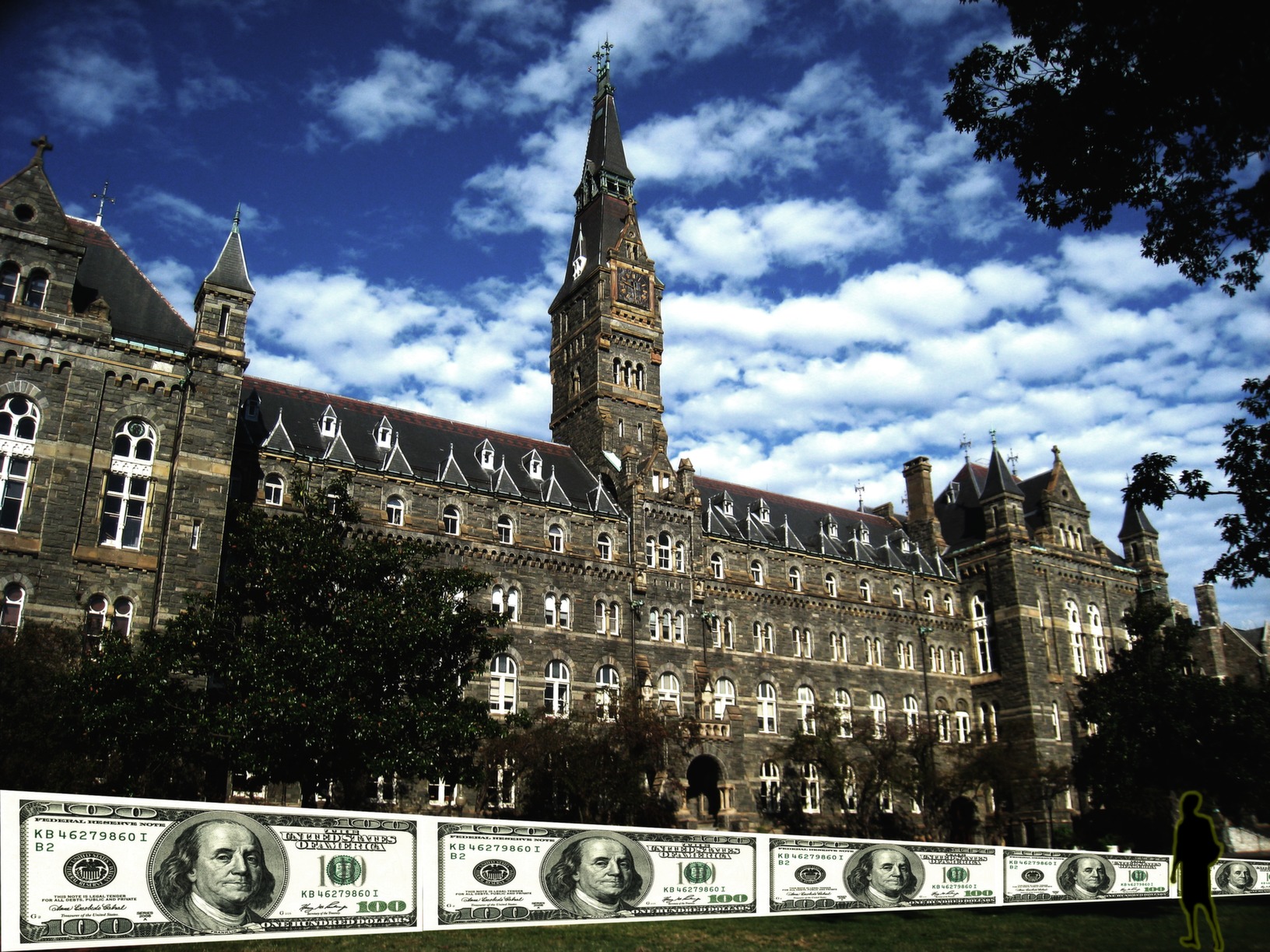
With college tuition higher than ever, having increased more than 500 percent since 1986, the cost of school plays an integral role in college decisions regardless of financial background.  The phenomenon of rising tuition and unrealistic financial aid estimates has had a pronounced effect on members of  the Saint Ignatius community alone.

Zach Keirn, a senior member of the track team and National Merit Semifinalist, knows just how important financial aid is in the college search.  After applying Early Decision to Amherst College, not only one of the most selective schools in the country but also known to be one of the most generous in regards to financial aid, he received word of his acceptance in mid-December and couldn’t be more excited for the following year at his “dream school.”

“I knew it would be a [financial] stretch from the beginning,” Zach said, “but I figured it would all work out in the end.”

With the acceptance letter and nothing but a quarter left of his high school career, Zach was “all but sure” he was attending Amherst College.  Since Amherst College has an endowment that could accommodate each student in the school with one million dollars, finances didn’t stress him out very much.

“I have four siblings yet to come through school, and my dad is in the process of starting a business; I thought they would be able to evaluate my situation fairly,” said Zach, after receiving the first financial aid package.

However, after financial evaluations, Zach realized that he needed a very small amount more from the school if he was going to be able to attend; he quickly notified Amherst and submitted his appeal with plenty of time for the school to reevaluate.

As the days quickly passed and the decision deadline approached, Zach became more and more frustrated with the service he received from the financial aid office at Amherst.

“I sent email after email and got nothing in return. I understand if you don’t have enough money for me, but I don’t understand how unprofessionally I was treated,” Keirn said.

Having received no word with just one day remaining before the decision deadline, Zach called Amherst one last time to ask if the financial aid office had been willing to come down the small amount, but he was greeted with a rather curt secretary and a significant raise in the amount of tuition he would have to pay to attend.

“There was just no way,” Zach explained, emphasizing how surprised and upset he was by the disrespect with which he felt he had been treated.

However, the result isn’t all bad; Zach will be happily attending Fordham University at Rose Hill next year on a full academic scholarship.  One dream may have been deferred, but Zach is determined not to be held back.  

People’s Say of the Eye’s Word

by Parviz Kanga ’15

Today’s issue of The Eye is the result of 87 years of history that have slowly molded the paper into its present form. Even recently, notable changes have affected the style and purpose of the Eye, making the newspaper an interesting topic for discussion.

The students’ opinion about the Eye – what do they look forward to in each new issue, what they find subpar or lacking – is marked by a surprising amount of optimism running through the veins that bleed blue and gold at St. Ignatius. However, that is not to say that students prefer solely hard news in their paper, nor that they are satisfied with its current iteration.

Most students, regardless of their grade, share similar opinions about the informative value of the Eye in respect to typical news-focused articles, excluding the sports section.

For instance, Sean Sovacool ‘15, stated that they Eye is “somewhat informative.” That remark seems to encompass the general attitude towards the Eye’s value as a source of information and up-to-date news: helpful, but not an exclusive voice of authority, given the paper’s monthly status.

Most students seem generically positive about the Eye, but often in a disinterested tone. Sam Klanac ‘14, remarked that the Eye is “decently entertaining and informative,” and Brendan Novak ’15 apathetically proclaimed, “It’s alright I guess.”

Some students however have shown greater enthusiasm such as Bryan Nguyen ’16, who enjoys reading the entire Eye because it “provides him with something to do during his free period.

As expected, however, students like Nguyen are looking first and foremost for entertainment, and this entertainment sometimes comes from sources stereotypically expected of young adult males: sports, comedy, and games.

Of these three sources of entertainment, comedy is valued most in the school newspaper. This truth, anathema to some of the paper’s senior editors, is obvious when comparing student reactions to the Eye with student reactions to the Lie, the satirical April Fool’s edition of the Eye. Student reactions to the Lie, the opinion of editor-in-chief Alastair Pearson, were not only more positive but also much more sincere.

“I can’t deny that I was pleased with the positive reception this year’s Lie received,” Pearson said. “It’s the only time I’ve had a student shake my hand after an edition, or received a complimentary email from a parent. But it is disappointing, and, I think, unfortunate that the student body doesn’t place the same importance on our factual issues.”

Comedy is greatly valued in the eyes of the student body. This truth also relates to the most “enjoyable” sections of the Eye. The “Love Guru,” in particular, is one of the Eye’s most popular sections due to the comedic, fictional dating advice given by Joe Latkovich ‘14.

The other two sections of the Eye that have received the greatest praise are the sports section and the back page. The former is obviously a result of the strong athletic environment present at St. Ignatius and the typical attitude men have in general towards sports; the latter stems from the general desire of young adults to play games rather than to learn.

It is evident, although not surprising, that the student body values simple forms of young adult entertainment over typical news stories involving the wellbeing of the school and its non-sports related activities.

However, overall attitudes toward the Eye seem positive, on balance, and most students do not desire change besides the incessant quest for a “funnier” Eye.

“We’re talking to you, Keegan Holland,” Pearson said. “Feel free to start your own paper any year now.”

Ignatian identity: Elite academy, faith-formation, or both?

by Patrick Millican ‘15

At Saint Ignatius High School, as at any institution with a mission statement that it takes seriously, there is at times a conflict between our school’s professed ambitions to train applicants for excellent colleges and broaden our scholastic horizons on one hand, and to form men who enthusiastically serve their community and the world and who are possessed of strong faith on the other.

When time and money devoted to one comes at expense to the other, debate begins about the potential contradictions between the school’s core Jesuit identity and academic mandate.

“To me it has always seemed like there is a contradiction between the Jesuit core belief – really the Christian core belief – of others-centered service and the academic mandate to strive for success at all costs,” said Chris Bambic ‘14. “If we go from a purely logical standpoint and attempt to achieve success at all costs, then we might easily step on our fellow man in our climb up the ladder of success.”

The Ignatius student body is composed of two main camps, divided on the issue, not by it, since differences of opinion the school’s primary object don’t make enemies of friends or segregate lunch tables. Nonetheless, the difference in what students want out of their education here is palpably evident in the attendance at various extracurriculars.

With exceptions, competitive academic organizations like the school’s traveling Model United Nations team tend to attract intellectuals who affiliate with the pedagogic aspect of our school’s Jesuit identity, whereas service organizations, coordinated especially through the Arrupe House, attract students more attuned to the Man-for-Others ethic espoused by Jesuits in more recent decades.

Dean of Academics Mr. Gavin, however, thinks that people are operating under the wrong assumption if they believe that the two aims are necessarily at cross-purposes.

“I would never look at it as a conflict,” he said when asked whether he believes that the divide exists. “This school is college-prep, but it’s also life-prep. Personally, that’s where the religious and service formation comes in most handy–after college.”

He admits, however, that it’s a balancing act, noting that Sophomore Service and Kairos retreats are longtime obstacles in sophomores’ and juniors’ schedules and come – especially in the case of Sophomore Service – at the expense of academic pursuits, while teachers are “gatekeepers” in that they reserve the right to refuse to allow a student to go on a retreat or serve a funeral if he is struggling in their class.

Bambic, involved in both service and more academic extracurriculars like Science Olympiad, said that his experience at Ignatius has showed him that it is possible to reconcile both goals.

“Ignatius’s Theology courses and focus on Christian service has taught us that it is indeed possible to strive for success while serving God and our fellow man in the process,” Bambic said. “One can be a billionaire or a famous scientist and still be a good man, the part that matters is that he makes his money or achieves his success not for his own benefit but for that of his friends, family, and the community as a whole and for God’s greater glory. Hence the all important motto of AMDG which was instilled in us from the moment we stepped in.”

French Department Wins Cinco de Mayo Soccer Game

by Kevin Malloy

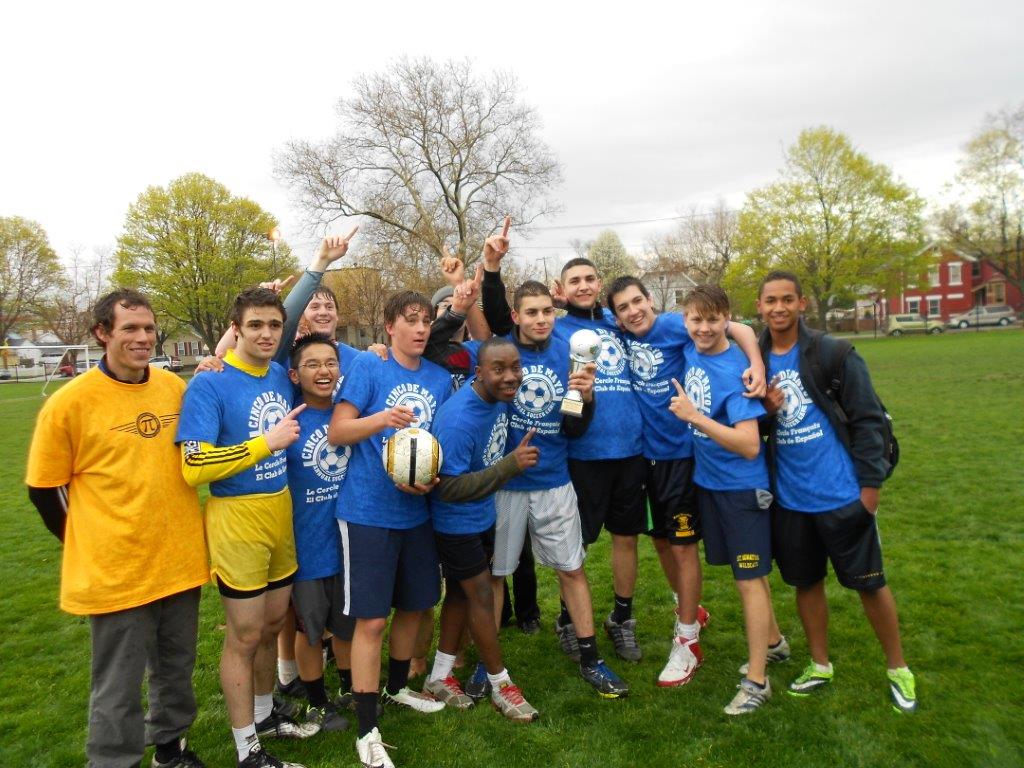
The French bested the Spaniards 4-2 in this year’s 5th annual Cinco de Mayo soccer game, avenging last year’s defeat.  With the victory, the French department regained control of the series with an overall record of 3-2.

DSCN0035
The two teams pose feigning peaceful sportsmanship before battle.

The French jumped out to an early 2-0 lead and never looked back.  Joe Shaia ’15, who led the all players with two goals, in part attributed his success to his FIFA 2014 experience: “I rigorously practice each day by playing my brother in FIFA.”  Shaia went on to say, “Soccer is a team sport, though, and my teammates were fantastic.”  The other French goal scorers included Anthony Jackson ‘14 and Besar Vajusi ‘15.

Gabe Mariotti ’15 believes that the French department had a chip on its shoulder after two consecutive losses.  “We were going to do everything possible to prevent the Spaniards from walking over Les Bleus again.  Our junior and sophomore players were very motivated to bring home their first win.”

Whoever wins, it appears that the games in years to come will continue to promote a friendly rivalry between the two groups language students.