2013 has been a phenomenal year for films both critically and culturally. From the revolutionary special effects of Gravity to the impactful and masterfully shot films such of The Place Beyond the Pines, Prisoners, Short Term 12, and Fruitvale Station, this year has already established itself as one of the best in movie history. That trend is showing no signs of stopping with the biggest films of 2013 preparing to become some of the prime contenders for both Oscar’s and Ignatian discussions for a while.
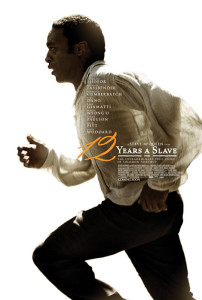
12 Years A Slave (November 1st, 2013)
The hype is strong – festival screenings are calling 12 Years A Slave “the Schindler’s list of slavery.” Based on a true story, Chiwetel Ejiofor stars as Solomon Northup, a free black man who was kidnapped into slavery in the backdrop of the growing Abolitionist movement of the 1840s. Gruesome but powerful, this film is an unfaltering depiction of a brutal and unjust time in American history. While not for the faint of heart, the directing, acting, and overall message create a compelling film that is essential viewing for the attentive cinemagoer, and one that is sure to be in the lead for Oscar contention.
The Wolf of Wall Street (December 25th, 2013)
Maybe The Wolf of Wall Street will do what The Great Gatsby was supposed to do but failed after getting too busy looking at the pretty lights: criticize excess and materialistic inversions of the American dream. Starring Leonardo DiCaprio and directed by the reliably good Martin Scorsese, The Wolf of Wall Street tells the true story of Jordan Belfort, a New York stockbroker who denied involvement in a large securities fraud case in the 1990s. The relevance to modern times in the aftermath of the financial collapse is clearly a motive behind the film’s production, but the look of the trailer shows what may be a new direction for Martin Scorsese towards a more streamlined, modern approach to filmmaking.
The Hunger Games: Catching Fire (November 22nd, 2013)
The second installment of the Hunger Games trilogy promises to be bigger and better in every way. With a more than doubled budget and new director helming the rings, Catching Fire aims to involve a more deeply emotional journey for Katniss Everdeen (Jennifer Lawrence) and take a more sophisticated attitude towards the oppressive government of Panem.
Thirteen Saint Ignatius students have qualified for National Merit Semifinalist status this year, ranking Ignatius among the top two schools in the region.
[pullquote]
National Merit Semifinalists 2014
Solon 20
Saint Ignatius 13
Shaker Heights 12
University School 11
Hathaway Brown 9
Westlake 9
Hawken 8
Laurel 6
St. Edward 4
Rocky River 3
Gilmour 2
Beaumont 2
Saint Joseph Academy 2
Holy Name 1
[/pullquote]Despite the impressive ranking, the number of Saint Ignatius students who have qualified is down this year after the threshold score for the award was an unusually high 215, an increase Mr. Brian Martin, head of the counseling department, attributes to a comparatively easier PSAT.
He says that while he had hoped that more than the thirteen who qualified to be National Merit Semifinalists would have made the grade, he was nonetheless quite pleased with the results, which put our school at number two in Northeast Ohio.
Besides National Merit Semifinalists, the senior class includes thirty-three students recognized as National Merit Commended Students or minority achievement candidates.
While he says his sample size isn’t extensive by any means, Mr. Martin says that the consensus about this year’s PSAT, conducted on October 16th, is that the math sections were harder than expected and the reading and writing sections easier than most students had anticipated.
Results for this year’s PSAT will be available on the College Board website in December.
“You know what I really hate? Smartphones. Our lives would be so much better without them.” Said no one. Ever.
In the world we live in today, smartphones play a significant role in our lives and affect us all in one way or another. Unfortunately, it doesn’t take very long for our shiny new phones and smartphones to become outdated, experience glitches, or flat out stop working.
So if you’re looking for a new smartphone, I present to you three of the best Android phones on the market right now. And no, the iPhone 5S and iPhone 5C are not on this list, because it’s time to give the other phones on the dance floor the spotlight for a change.
HTC One What better way to start off this list then to talk about a phone that is literally called “One?” This phone has received universal acclaim and recognition for its sleek design, sharp display, and great sounding speaker. If you’re in the market for a phone of the highest quality, the HTC One is definitely worth checking out. $149.99 with Verizon contract.
Samsung Galaxy S4 Powerful, innovative, and all around gorgeous. These are words people have used to describe the Samsung Galaxy S4. Samsung has always been known for making great smartphones, and the Galaxy S4 proves that. With its stunning display, innovative interface, and overall power, the Samsung Galaxy S4 is one smartphone to definitely consider buying. $199.99 with AT&T contract.
Nexus 4 If you’re looking for a high-end smartphone for half the price of its competitors, then the Google Nexus 4 is the phone for you! The Google Nexus 4 is equipped with a beautiful display and powerful hardware; all within a exquisite design. With the features mentioned and so much more, the Google Nexus 4 is the best “bang for your buck” smartphone out there. $19.99 with T-Mobile contract.
It’s that time of year again. Young children are encouraged to take candy from masked strangers, it becomes socially acceptable to hang fake dead people in front yards, and innocent orange fruit is hacked into, gutted, then set ablaze on the front porches of suburban homes across the country. Halloween is upon us, and the season of haunted houses is in full swing. A few weeks ago I managed to unglue my eyes from AMC’s Fear Fest, chock full of gem after gem of classic horror movies like Halloween 8: Resurrection and Pet Semetary 2, to go with some friends to check out The Fear Experience, produced by Ignatius alum Max Simon ‘13.
I was excited by the good press – “Northeast Ohio’s Premier Haunted Attraction,” Cleveland.com raved about The Fear Experience. After travelling deep into the bowels of Parma to get to the haunted house late at night, all the while hearing terrifying radio advertisements for the house, my nerves were already on edge. However, that did not take long to change. I joined the first line, which turned out to be a long line to buy tickets to enter an even longer line. For $22 a ticket (these were the cheapest ones too) I was expecting the scare of a lifetime; my wallet based on a meager summer lifeguarding salary ,can’t handle that heavy bombardment. But no mercy was forthcoming.
As I wasted away in a line moving at roughly the speed of the average Department of Motor Vehicles photobooth, a strange man with a cat toy meowed at us, presumably trying to scare us. My friends and I quickly reached the conclusion that a terrible mistake had been made in deciding to come. After waiting a life-draining three hours in line, morale was low and not everyone made it to the other side (at least one girl fainted). We pressed onward, making our way through four separate houses, jumping in surprise a grand total of one time. At the end of the mere twenty-five minute experience, I stood with my caravan, legs aching from standing in line and wallets crying out for retribution.
My crew teammate and friend, fellow senior Joe Kollin put it best.
“The only thing worse than the seemingly endless line and pathetic attempts to scare by wannabe ‘monsters’ was the inconvenient, excessive pricing,” he said, and then went on to list a few more grievances not to be repeated in polite company.
The Fear Experience will terrify nothing but your wallet and your patience.
Ask any alum for a list of their favorite teachers, and Jim Skerl is sure to be one of them.
Through his leadership in Labre, C.A.T., and the many other Christian service initiatives he has become involved in during his years at Ignatius, Mr. Skerl has touched the hearts of thousands of people. Whether it was through teaching his theology classes at school, the bonds he has created with those in need on Sunday nights at Labre, or his leadership at the weekly C.A.T. meetings, Mr. Skerl has for years embodied what it means to be a Man for Others.
This past February, Mr. Skerl was diagnosed with pancreatic cancer. The diagnosis came as a shock to Skerl, whose active and healthy lifestyle included riding his bicycle to school most days of the year. Adding to that shock was a grim reality: Pancreatic cancer is one of the most difficult cancers to cure.
[pullquote]
“I’ve been so deeply touched by the number of people who have been praying for me,” said Skerl. “The power of prayer shrunk my tumor.”
[/pullquote]
Skerl and his doctors at the Cleveland Clinic opted for aggressive rounds of chemotherapy combined with radiation, intended to shrink his tumor prior to surgery. This approach would give the surgeons the best chance to remove the cancer in its entirety.
Over the summer, Mr. Skerl underwent surgery, where his doctors successfully removed the tumor.
Following surgery, he spent the rest of the summer recovering from this operation. He will continue chemotherapy and radiation for another six months.
“The worry now is if there are any other renegade lymph nodes running around,” he said. After surgery, 33 of his lymph nodes were tested, and all were clear of cancer.
When he talked about his illness and recovery, he stressed his deep gratitude and humility for the unbelievable support given to him by the Saint Ignatius community.
“I’ve been so deeply touched by the number of people who have been praying for me,” said Skerl. “The power of prayer shrunk my tumor.”
And Skerl believes his fight with cancer has made him a better teacher of Theology.
“I see things from a whole new perspective,” he said, especially when the topic in his classroom turns to sickness and dying. “This experience has not challenged my faith, but strengthened it,” said Mr. Skerl.
He relates his experience to the Biblical story found in Luke 5:17-39, where a sick man is lowered down through the roof of a house due to the crowds, and then healed by Jesus. “I feel like I am the sick man,” he said. He feels the continual support of the community and of those around him, both of which have carried him through this journey and have kept him here to continue his generous life.
The college application process consists of colleges who need students and the students who want to attend them. These are their stories.
Adam Kallibjan
“Being in the symphonic band has helped me like performance-wise. I’ve done everything on my own to prepare myself.”
Saint Ignatius band librarian Adam Kallibjan hates rap, is just willing to tolerate dubstep, and adores classical music. He also wants a job in the modern music industry. His chosen profession: composer.
Kallibjan has essentially created a college application plan that rejects the most fundamental norms of the system. Music schools barely care about transcripts, and he says he sent Berklee his as a courtesy.
The linchpin of the music school application is the live audition, which must be done in person at the college campus. His first audition is coming up in November at Berklee, and he has already chosen and begun practicing a piece.
The rest of the schools Kallibjan is applying to aren’t as relaxed as Berklee, and he will have to memorize a number of specifically requested musical selections for auditions coming up around February.
Kallibjan says that his ambition to go to music school means he has had a significantly different application process from his peers in instrumental music at Ignatius.
“Even within the band, I think I’m the only one who’s doing this,” he said. “Being in the symphonic band has helped me like performance-wise. I’ve done everything on my own to prepare myself.”
Although Kallibjan has been playing the piano for 11 years and the saxophone for six, and currently works with the Cleveland Institute of Music, he says his parents had some doubts about his desired career path.
“At first they were just concerned,” he said. “Lately, they’ve been a little bit more supportive.
He wants to spend a career working with music, doing what he does in his spare time – composing.
“It’s like my ultimate dream right now,” he said.
Jack Coyne
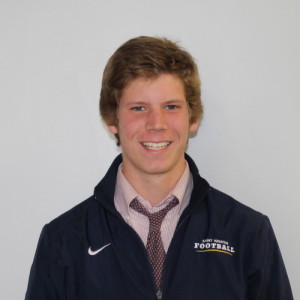
“Academic strength, best chance for me to get into [the] best business school, most comfortable setting for me to spend four years in,” Coyne said, describing his criteria for college selection.Varsity golf captain Jack Coyne has taken an uncompromisingly high-stakes approach to the college admissions process. Unlike most students at Ignatius, where the average number of applications hovers around eight or nine, Coyne is currently banking on two applications, although he intends to apply to schools to be assigned if his gamble doesn’t pan out.
After being recruited by both Harvard and Miami University, nationally ranked golfer Coyne chose to apply early to just Harvard and Williams, two of the most selective undergraduate colleges in the country. One in 6 applicants were accepted to Williams in 2012, and barely one in 20 were admitted to Harvard.
Although Coyne has not chosen a major yet, he said that overall academic strength was among the most important of the numerous factors he was weighing during his college application process.
He is aiming to match his ambitious goals as a potential Division 1 athlete with an appropriately competitive academic environment.
“Academic strength, best chance for me to get into [the] best business school, most comfortable setting for me to spend four years in,” Coyne said, describing his criteria for college selection.
He said that in addition to the city setting, Harvard stood out for one reason in particular.
“Academic excellence.”
Michael Zupan
“I’m interested in nuclear engineering due to many factors, the largest being the apparent underuse of such a good technology.”
Michael Zupan, the student body president, has focused on an unusual combination of disciplines in narrowing down his list of colleges: nuclear engineering and political science.
Zupan said his options were relatively constrained given the scarcity of schools offering a nuclear engineering major. He intends to use the double major in political science to complement the technical skills he will learn as an engineer.
“I’m interested in nuclear engineering due to many factors, the largest being the apparent underuse of such a good technology,” Zupan said. “I want to get into political sciences at the same time so that I understand the technology and safety issues.”
He aims to continue as a student leader in some capacity at whatever school he ultimately attends, although he does not want to continue as a varsity athlete in college.
Zupan says he thinks he will be a competitive applicant to the colleges he is applying to, though he wishes his test scores were backed up by a higher GPA. If he is not accepted at one of his top choices, he believes he will be capable of handling the disappointment with the aid of student body vice president Owen Manning.
“I’ll probably cry a little bit, then go up to East Coast Custard while Owen’s working and drown my sorrows in a malt shake,” Zupan said.
Owen Manning
“One of the things that I write about in my college essays is my haiku talent.”
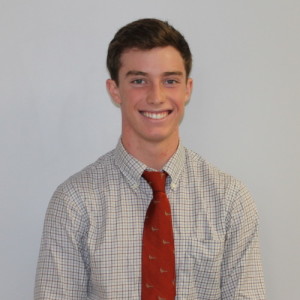
Owen Manning has renounced his past.
The former leading light in the Fr. Streicher Humanities Program and current student body vice-president has decided to become an engineer, joining fellow Streicher alumnus and student body president Michael Zupan in dropping the fine arts for cold, hard science.
“The thing is, I think I’m still a reading and English guy,” Manning said. “It’s important to be able to read and write well – just be able to relate to people.”
He hasn’t decided on a specific engineering discipline, although he is considering focusing on the environment. But Manning is committed to ensuring that he has a broad-based college experience that incorporates strong engineering and liberal arts programs, a meaningful service program, and a good “community feel.”
Manning has narrowed his list down to just six schools, the result of both his goal to keep the application workload down to a manageable level and his specific criteria.
“That was something that I really wanted to do – keep a narrower list,” he said. “I had sort of a specific search with engineering. Most of my schools are pretty local.”
His applications will be backed by a personal essay describing a passion, and experience, that few other applicants will be able to match. He is an avid writer of haikus, the three-line, seventeen-syllable Japanese poems.
“One of the things that I write about in my college essays is my haiku talent,” Manning said. “I did a talent show at St. Joe’s last year, and that was kind of my defining moment.”
Although no awards were given, Manning said he was the champion in his own mind.
“I am a person whose identity has been forged by the world of business. We cannot overlook the role of local subtleties and cultural nuances.”
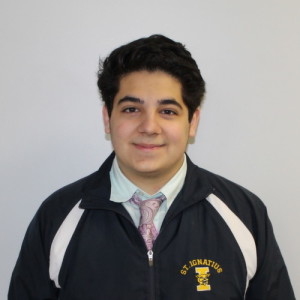
Sami Petros is nothing if not international. The proficient Arabic speaker and first-generation American was raised in a Lebanese family that spans the entire globe, from Dubai to Paris, London to Australia to China, Japan, Oman, and Qatar.
And he wants to take his own goals as a businessman global as well. Petros is applying to schools where he can study business and economics, with a focus on international business. At New York University, he is applying specifically to programs housed in Abu Dhabi, Shanghai, and London.
“I’m pretty good at adapting. I like to pick up different cultures,” Petros said. “It is my firm belief that our generation must learn to conduct business in the global arena.”
He has been working feverishly on the Common App essay question and gone through endless drafts for school-specific essays. Petros said that he is adopting a wide-ranging application strategy.
“A lot of these are reach schools for me, a shotgun approach – a Hail Mary if you will,” he said. “”I loved a lot of the ones I visited, which is half the reason, and I’d be happy at any of them.”
He plans to study Arabic in addition to business, both to boost his business versatility and to help him around the house.
“I know swear words, and I understand it fairly well,” Petros said, but although he can successfully talk through dentist appointments in Arabic, he still struggles to understand his family at times and can’t read the language.
Even though he’s applying to select schools, he said that his parents have not been pressuring him through the process.
“My parents would support me whether I wanted to live in a van down by the river,” Petros said. “That being said, I wished they pressured me a little more.”
As Petros finishes the college application season, he is focused on the future and developing his multicultural approach to business.
“I am a person whose identity has been forged by the world of business,” he said. “We cannot overlook the role of local subtleties and cultural nuances.”
Vincent Hwang
“I have some leadership skills that not all engineers have.”
Thirteen schools drawn from the creme de la creme of selective American universities. An applications plan targeted at 13 colleges with the aim of scheduling five to six courses – per semester. Double majoring in rigorous disciplines at the world’s most demanding academic institutions.
Vincent Hwang does not let opportunities pass by.
The omni-involved Ignatius senior is planning to major in both business and engineering in college, which will sum to a total time in class he estimates at around 20 hours per week.
“I’ve been thinking about what to do with my life for a long time,” Hwang said. “I have some leadership skills that not all engineers have.”
He is applying to the selective Jerome Fisher program at the University of Pennsylvania, which allows students to major in business at the top-ranked Wharton School of Business and in engineering at the nationally ranked School of Engineering and Applied Science.
Hwang was introduced to the program during his freshman year rides to school with Matthew Petrella, Class of ‘11, a current Fisher Program participant. He said his personal research had only increased his desire to apply.
“I visited UPenn last summer, and not only did I fall in love with the campus, I fell in love with the program,” Hwang said. “This program is not only for the bookish type. They want someone who is well-rounded.”
He says that if he gets denied from UPenn or any of his other top choices, he will be able to handle the disappointment given his experience last year being denied to all four of the summer programs he applied to.
“I can double major anywhere. I think I’d be okay anywhere,” Hwang said. “I also think that I’ve chosen some really good schools. I’d be happy at any of them.”
But, like many Ignatius seniors, Hwang said he has been challenged trying to keep to his personal timetable for completing the huge volume of application materials.
“I think I’ve been very good at procrastinating,” he said.
Although the college application system at Saint Ignatius has rapidly changed in response to the shifting interests, demographics and goals of the student body, the fundamental nature of the process has remained intact.
Saint Ignatius students still primarily apply to four-year state, Jesuit, or out of state public and private schools. Students complete an average of eight to ten applications, an increasing percentage of which have been early action in recent years due to the perception that early applicants receive more financial aid.
Ohio State was the top choice for the class of 2013, followed by a close contest between John Carroll University and Miami. Dayton, Xavier and Ohio University were also all highly sought after by St. Ignatius applicants.
Historically, top major selections on applications have included business, engineering, and pre-med, although College Counseling Director Ms. Gabor said that the number one choice remains “Undecided.” Gabor stresses that there is little uniformity in the Saint Ignatius applicant pool.
“I don’t know that I would say there is a typical student, because everybody has different interests, different goals,” Gabor said.“If there is only one characteristic of most of our applicants, it would not be the academic or athletic. It would be wanting to continue their service to others.”
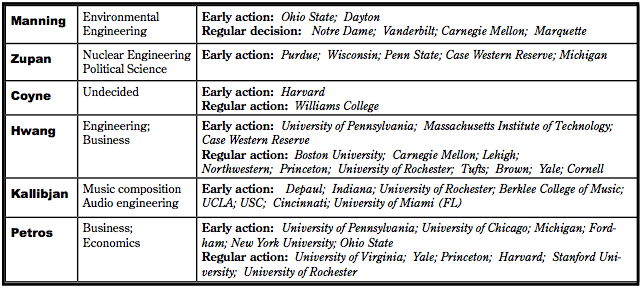
On page 5 of this issue, the Eye profiles six seniors who plan to go on to majors in disparate fields ranging from nuclear engineering to music composition, some focusing on extending extracurricular interests like golf or entrepreneurship into their college careers. Four of the six are involved in service.
Gabor said that Saint Ignatius produces graduates equipped with the advantage of a liberal arts high school education. She acknowledged that Saint Ignatius has peer schools in the Northeast Ohio and greater Ohio regions, including St. Edward, University School, Hawken, Shaker Heights, and St. Xavier, but said that Saint Ignatius stands out from the pack due to the school’s broad-based curriculum.
“I think [of] the breadth and depth of our education. We’re not just a math school, we’re not just a Jesuit school,” she said. ”We have a more diverse student body in terms of interests.”
One trend affecting the Saint Ignatius college applicant pool in recent years has been the increasing diversification of the student body. Gabor said that she was especially impressed by the results of the school’s investment in the fine arts program, which she credits to the construction of the Breen Center and the development of the AP Studio Art class and other visual arts courses.
“I’ve seen more students who are applying to arts programs and visual arts programs,” she said.
Some students have just been applying to more schools period. Gabor said she had noticed that some applicants had expanded their lists of potential colleges.
“I would say we’ve had students on occasion apply to 20-plus schools,” she said. “That’s not average.”
Increasingly competitive college admissions may have contributed to student concerns about the college process, as academically oriented applicants search for ways to distinguish themselves. One of those ways at other schools is often class rank, which Saint Ignatius abandoned about 15 years ago.
“It’s not part of the mission of our school,” Gabor said. “We’re about offering opportunities.”
Gabor advises students to get organized and relax. Although she acknowledges that students are focused on college selectivity, she thinks seniors should keep things in perspective.
“I would say to take things in small chunks, to take things in time and hopefully enjoy your senior year a little more,” she said. “Listen to your college counselor and take time to enjoy your senior year.”
“Everybody ends up where they’re supposed to be at that time in their life,” Gabor said.
Students at Saint Ignatius High School have a unique and challenging opportunity to earn college credit in Studio Art. However AP Studio Art isn’t for the artistically lacking student. This rigorous course is recommended for those who are highly interested in the professional careers in art.
Most AP courses offered at St. Ignatius conclude with an exam containing a multiple-choice, free response, and sometimes an audio section. In AP Studio Art, the students need to turn in an extensive art portfolio portfolio. The portfolio is graded according to the following three categories: quality, concentration, and breadth.
“It’s a very demanding course in which the students have to create about 24 pieces of artwork, depending on the portfolio they chose to create,” said Ms. Burrows, the current AP Art teacher at Ignatius.
AP Studio Art contains three different courses in one, including 2D Design, 3D Design, and AP Drawing. The AP Studio Art course teaches students that not only is art an ongoing process, but that it requires informed decision making. Students learn technical skills and the functions of visual art. Students are encouraged to contribute creatively and critically to their culture of art.
All students interested in AP Studio Art at St. Ignatius need to have taken two Visual Arts courses, and must be approved by the Fine Arts Department. Students who have graduated this course have gone on to major in fine art, architecture, and art history.
Most importantly, you can get a step ahead on your college career.
“[Students] can achieve college credit for their foundation courses for when they get to school,” Ms. Burrows said. “Generally the schools accept a 3-5 score.”
But AP Studio Art usually isn’t the end of the road for the art-obsessed students who take the course.
“AP Studio Art is for the individual who wants to pursue art as a career or major in college,” Ms. Burrows said.
The colors were vibrant yet not overwhelming and even tiny details like hair follicles and the spots of light on the eyes were easily seen and extremely accurate. Certainly someone with a talent for drawing and ability to express himself in a unique way had created this piece of art.
Anthony Casola ’17 began to take Beginning Drawing this year as an incoming freshmen without having ever been interested in art during grade school. Coming to Saint Ignatius, he got involved with the freshmen football team but did not yet involve himself with anything artistic. He had never drawn, painted, or even sketched doodles in his free time.
Now, he is showing real promise as an artistic student with his self-portrait project. The project involves a student rendering a picture of himself in a unique way and using complementary colors to learn how to draw faces with a saturated, realistic depiction. “I am doing a portrait of different shades…on the face and upper body”, Anthony explains, proudly exclaiming how it’s “very unique”, evoking a “happy feeling”.
Ms. Burrows expresses similar sentiments. “He (Anthony) represents the young artistic talent in our Saint Ignatius community. Watching him discover and grow this talent in class has been awesome,” Ms. Burrows proudly states.
Anthony has stated how in the future he would like to work on different light tones, drawing the face, lines, and portraits. He looks forward to taking more art classes at Ignatius. “I would say that my artwork would show that I’m an outgoing person and express myself in ways others may not”, Anthony concluded.
Mrs. Burrow concludes, “I am looking forward to seeing Anthony, along with many other freshmen in the Visual Arts class, truly develop their portfolios and creativity throughout their high school careers.”
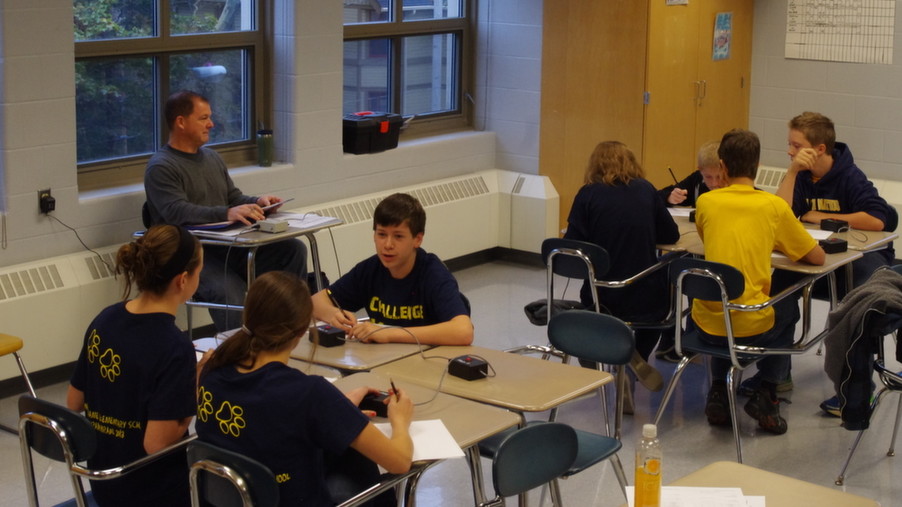
The third annual Saint Ignatius Brain Brawl, a general-knowledge competition akin to academic challenge for junior-high students, took place on October 19. The winners came from Incarnate Word Academy.
There were 24 teams from different schools, split up into four divisions of six teams. The top two teams from each division made it to the playoffs, where an eight-team tournament was used to determine the winner. In their third final-round appearance, Incarnate Word Academy beat St. Christopher.
“It will go on until I die,” says co-creator Mr. Barker.
Each round of the Brawl is composed of three sections. According to Mr. Barker, the head moderator of the Brawl, “The first section of the Brawl contains team questions,where each team answers a question on a certain topic and then a toss-up question is asked. The second is a letter round, in which there are twenty questions and the answer to the questions all begin with the same letter. The last one is a buzzer round, with twenty toss-up questions which are all based on one topic.”
Although this is only the third time the Brawl has taken place, Mr. Barker has high hopes for the tournament’s staying power. “It will go on until I die,” he said, “and then others will pick it up.” With fourteen teachers having helped out, the Brawl certainly seems as though it’s here to stay. “Ultimately, my favorite part is that it’s fun to see seventh and eighth grade kids having fun with questions that we created.”
Do you think that you could win the Brawl? Try answering the sample questions below.
Are you smarter than a middle schooler? Brain Brawl Edition
See if you can handle these questions from October’s massive on campus junior high trivia competition. Answers are located below.
US HISTORY Billed as “An Aquarian Exposition: 3 Days of Peace & Music,” this party took place on Max Yasgur’s dairy farm in New York from August 15 to 18, 1969. Attendance topped 500,000. Jimi Hendrix played the Star-Spangled Banner on his guitar. It was a good party.
SPORTS Three stumps, two bails, a bat, a ball, a sight screen, and the boundary rope. Players wear a polo shirt and white trousers, wicket keepers and batsmen wear gloves.
PARKS Containing the tallest trees in the world (species sequoia sempervirens), this 133,000-acre forest is located along the coast of Northern California. By 1968, more than 90% of this forest’s original trees had been felled, and in 1980, the United Nations designated it a World Heritage Site.
MOVIE CHARACTERS “Hello. My name is _____________ Montoya. You killed my father. Prepare to die.”
COLORS Deep blue-violet color, named after the plant from which it is derived.
WORLD HISTORY First name Johannes, he was the first European to use moveable type printing and, thus, is credited for the invention of the printing press, in 1439.
FORESTS Robin Hood called this forest his home, although in fact it is a real forest located in Nottinghamshire, England. The Major Oak is its most famous tree and Robin’s preferred hideout.
1. Woodstock Music and Arts Fair, 2. Cricket, 3. Redwood National Park, 4. Inigo, 5. Indigo, 6. Gutenberg, 7. Sherwood Forest


 The second installment of the Hunger Games trilogy promises to be bigger and better in every way. With a more than doubled budget and new director helming the rings, Catching Fire aims to involve a more deeply emotional journey for Katniss Everdeen (Jennifer Lawrence) and take a more sophisticated attitude towards the oppressive government of Panem.